
 Champions for Change
 Remembering Our Sisters
 Brave Heart
 California Native Youth Collective
 Building Communities of Hope
 Creative Native
 Democracy is Indigenous
FOR IMMEDIATE RELEASE
CONTACT: Jamie Levitt (jamie.levitt@aspeninstitute.org)
The Center for Native American Youth Announces 2025 Creative Native Winners
A record number of young Indigenous artists submitted work inspired by what they hold sacred.
WASHINGTON – December 16, 2025 – The Center for Native American Youth (CNAY) at the Aspen Institute is proud to announce the winners of the eighth annual Creative Native Call for Art. Each of this year’s five winners were selected for their depictions of what they hold sacred.
- Grand Prize Winner: Sikuyva Dawavendewa (Hopi), 20
- Category Winner: Halcyon Levi (Southern Cheyenne, Arapaho & Kiowa), 21
- Category Winner: Kenneth H. (Catawba Indian Nation), 17
- Category Winner: Chamish Ashoyn D. (Pala Band of Mission Indians), 13
- Category Winner: Aaden T. (Ponca), 7
Creative Native celebrates artistic expression – a cornerstone of many Indigenous cultures – by providing space and support for young artists, ages 5-24, to showcase their talents. Recognizing the diversity among tribes, all mediums are welcomed. In 2025, CNAY asked Native youth to submit art inspired by the following prompt: What is sacred to you?
“This year, we received a record number of submissions, each one inspiring our team with the level of talent, creativity and cultural expression that went into showing us what youth hold sacred,” said Tracy Goodluck (Oneida Nation & Mvskoke Creek), Executive Director of CNAY. “Art is a powerful conduit of expression, and we are proud to continually support and uplift young artists and their communities through this program.”
“Seeing what my work can achieve surprises me every day,” shared Grand Prize Winner Sikuyva Dawavendewa. “The goal of my pieces is to portray Hopi life in all its beauty, tell stories and give insight into the many Native American tribes.”
Nearly 80 Creative Natives from across Indian Country – and several international artists – submitted their response to the prompt. All submissions are displayed in CNAY’s virtual Gallery. Four artists – one from each age group – were named categorical winners, each receiving $300. One artist was also recognized as the grand prize winner, and received $1,000. Due to the high volume of submissions this year, the team also selected an honorable mention in each category. See below for information about the winners and their work! To connect with CNAY staff or youth artists, please contact Jamie Levitt (jamie.levitt@aspeninstitute.org).
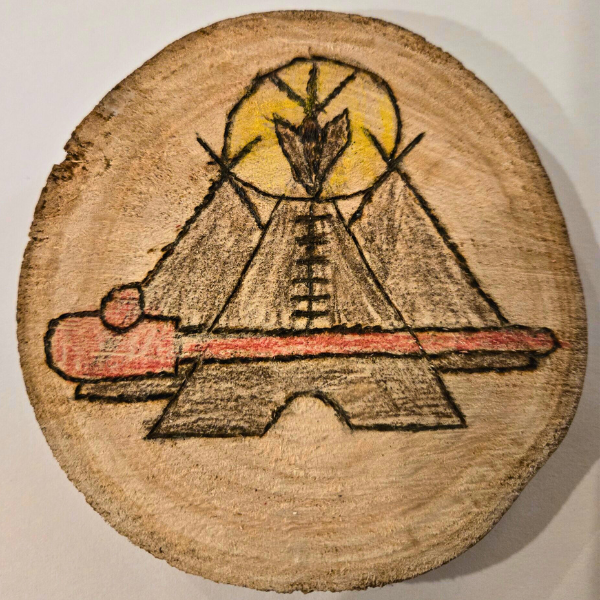
Category Winner: 5-9 Years
Aaden T. (Ponca), Age 7
“My art piece shows my tribe, Ponca of Oklahoma. It means that we should honor our ancestors and that we should always be kind. The teepees represent home, the peace pipe represents peace for all and the sun gives us life.”
Honorable Mention: Marcelino H. (Isleta Pueblo & Navajo), Age 9
Category Winner: 10-14 Years
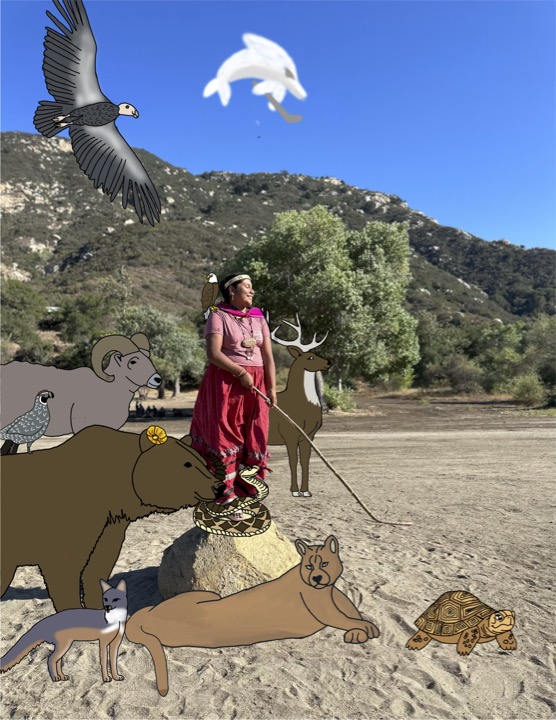
Chamish Ashoyn D. (Pala Band of Mission Indians), 13
“My art piece is about playing a game that I enjoy very much and have played my whole life. The game is called Shinny. I made it because I wanted to showcase how people play with friends and relatives. I wanted to show how I would have friends or relatives playing with me on a team. Since I believe animals are our relatives, I drew my relatives as animals playing with me.”
Honorable Mention: Charlie H. (Choctaw), Age 13
Category Winner: 15-19 Years
Kenneth H. (Catawba Indian Nation), Age 17
“This piece was made with clay I harvested by the river, the most sacred thing to my tribe. I have been taught the importance of not just making art, but also making functional pieces, just as my ancestors did. I started with a traditional pitcher, then added a bear (nimęɁ) to represent strength and healing.”
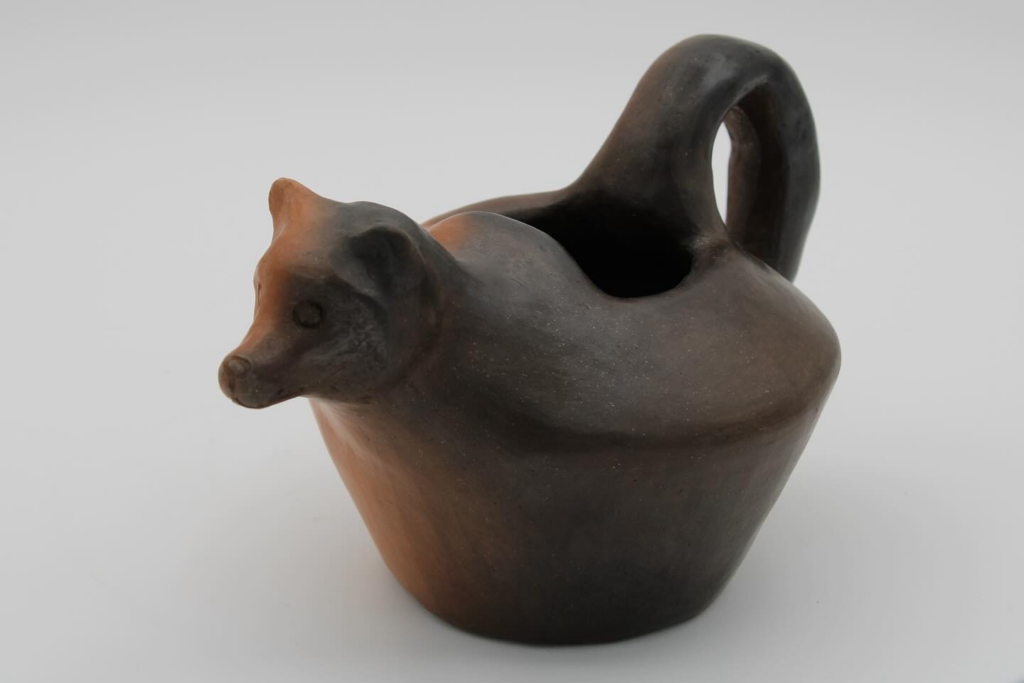
Honorable Mention: Rylan Funmaker (Ho-Chunk), Age 19
Category Winner: 20-24 Years
Halcyon Levi (Southern Cheyenne, Arapaho & Kiowa), Age 21
“Star Girl – made with colored pencils and ink – was inspired by my people’s creation story, how we come from the stars and are meant for them. The iron in our blood connects us to the fragments of stars that existed long before us. When I look to the night sky, I think of my ancestors who did the same. This piece was created on an authentic 1940 ledger, continuing my tribes’ tradition of using ledger art to carry our stories. The girl, dressed in a traditional Cheyenne buckskin dress, holds a star wand to represent this connection.”
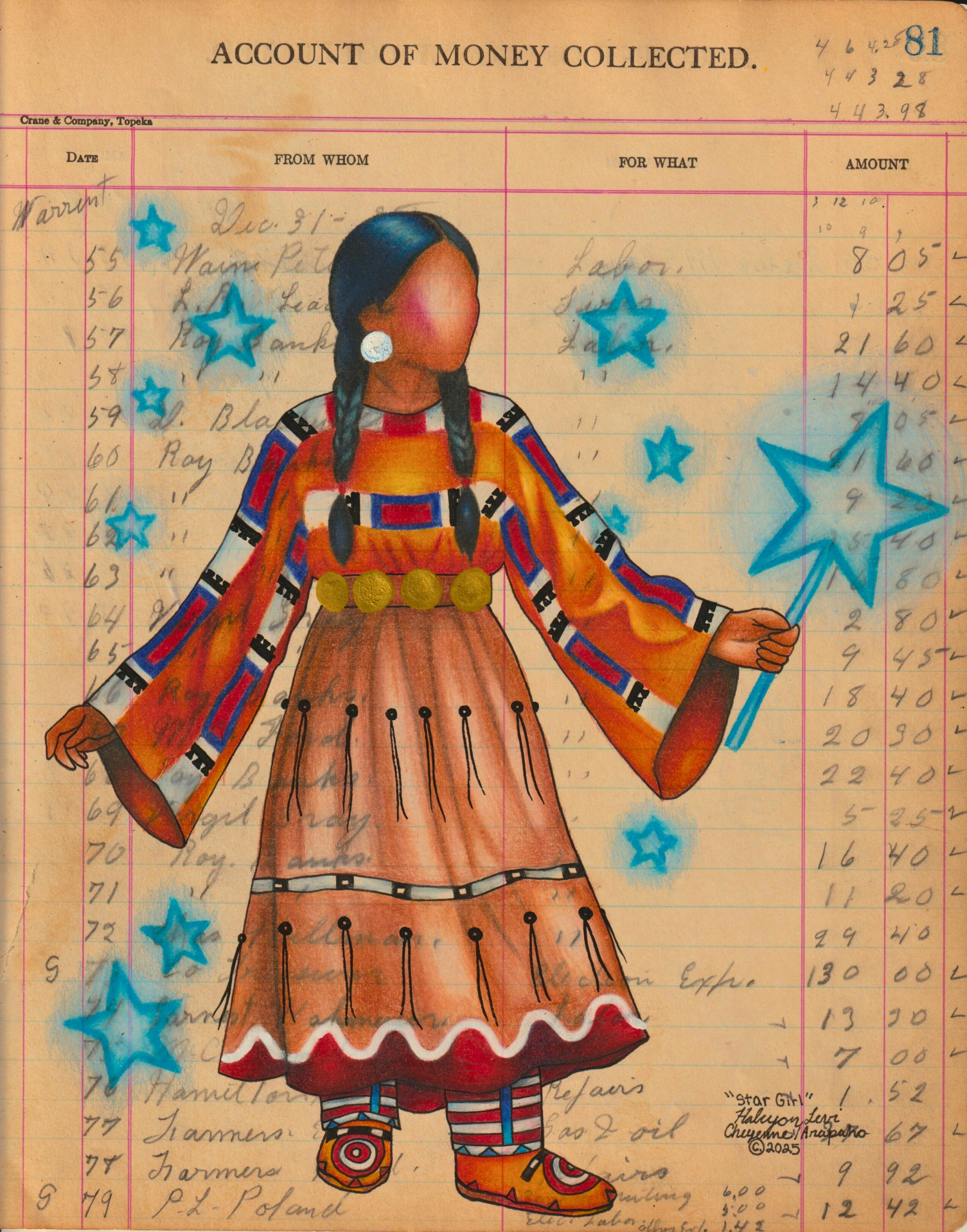
Honorable Mention: Christina “Mool-Mool” Kaltsukis (Yakama Nation), Age 23
Grand Prize Winner
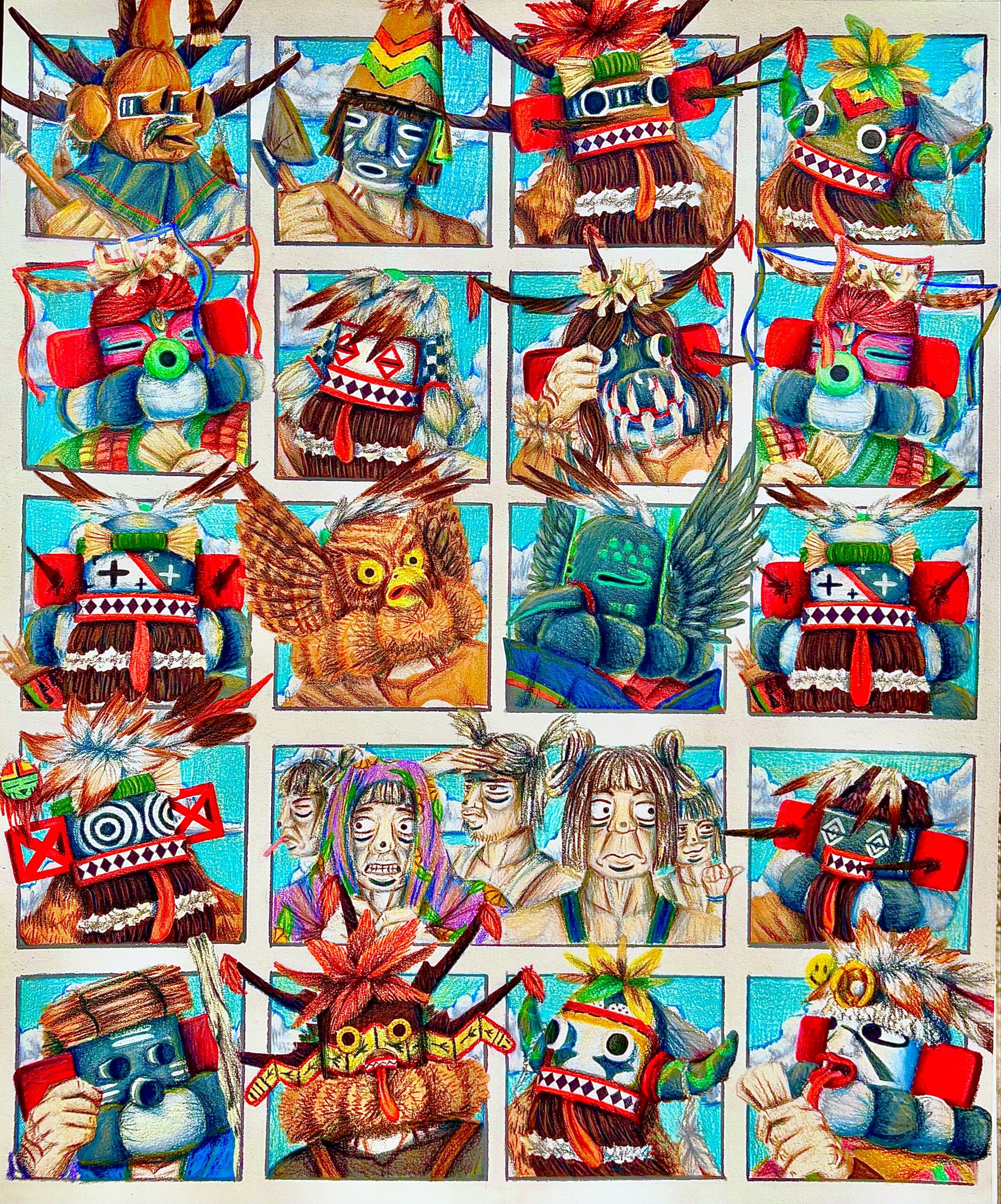
Sikuyva Dawavendewa (Hopi), Age 20
“The Kiipok Katsinam are a distinct group that appear alongside the Tsutskut (clowns) during Tiikive ceremonies. While the clowns represent the human journey from misbehavior to understanding and respect, the Kiipok Katsinam reinforce the moral principles of the Hopi way of life. They serve as guides and enforcers, reminding both clowns and community members to stay on the right path. Some Kiipok join in the clowns’ antics, while others act as authoritative figures who discipline the clowns, correct their behavior and ultimately purify both them and the people through symbolic ‘war.’”
###
About CNAY: The Center for Native American Youth (CNAY) at the Aspen Institute is a national organization that works alongside Native youth – ages 24 and under – on reservations, in rural villages and urban spaces across the country to improve their health, safety, and overall well- being. Rooted in culture, our vision is for all Native American youth to lead full and healthy lives, be honored for the leaders they are, and have the resources and agency to create the world Native youth are worthy of and deserve.