 Champions for Change
 Remembering Our Sisters
 Brave Heart
 California Native Youth Collective
 Building Communities of Hope
 Creative Native
 Democracy is Indigenous
This content originally appeared on the Center for Rising Generations’ Substack: The GroupChat
By: Giselle Alvarez (Purépecha & Miwuk), 2025 Brave Heart Fellow
Part of CRG’s “The Story is the Strategy” series, spotlighting how the stories we tell, and who gets to tell them, shape the systems we build.
The knowledge of my ancestors was passed down through spoken word by the women in my family. In the kitchen, filled with the rich scent of spices and herbs, there was an understanding of the medicinal power of plants. Nourishing meals for the body and spirit and spiritual ways of being. For many Indigenous peoples, our knowledge became a seed that preserved against displacement and erasure.
In school, I first learned about “Indigenous people” as something of the past, a relic, both romanticized/demonized and noble/savage. The seed within me was alive and deeply rooted, but there was no soil for me to ground myself on. No way to nourish it, so there it was, dormant and aching. The journey to higher education, to be seen not as the token “person of color” but as a person, is difficult and ongoing. Conversations about people in the abstract, in the academic, when there are those of us who are living in it, struggling against systematic barriers and inequities grounded in racism, socioeconomic factors, and more.
Erasure of our voices is not by accident, it is methodical. It’s in policy. It is who gets to be in the room, who gets to speak on our behalf.
Erasure of our voices is not by accident, it is methodical. It’s in policy. It is who gets to be in the room, who gets to speak on our behalf, decisions made from those who have not lived on government assistance, who have not been homeless, who were born with wealth and all of its privileges it entails. When you grow up on the outside, you expect those doors to stay closed. You accept that decisions will always happen without you. That assumption broke for me when I stepped out of that reality and onto a global stage.
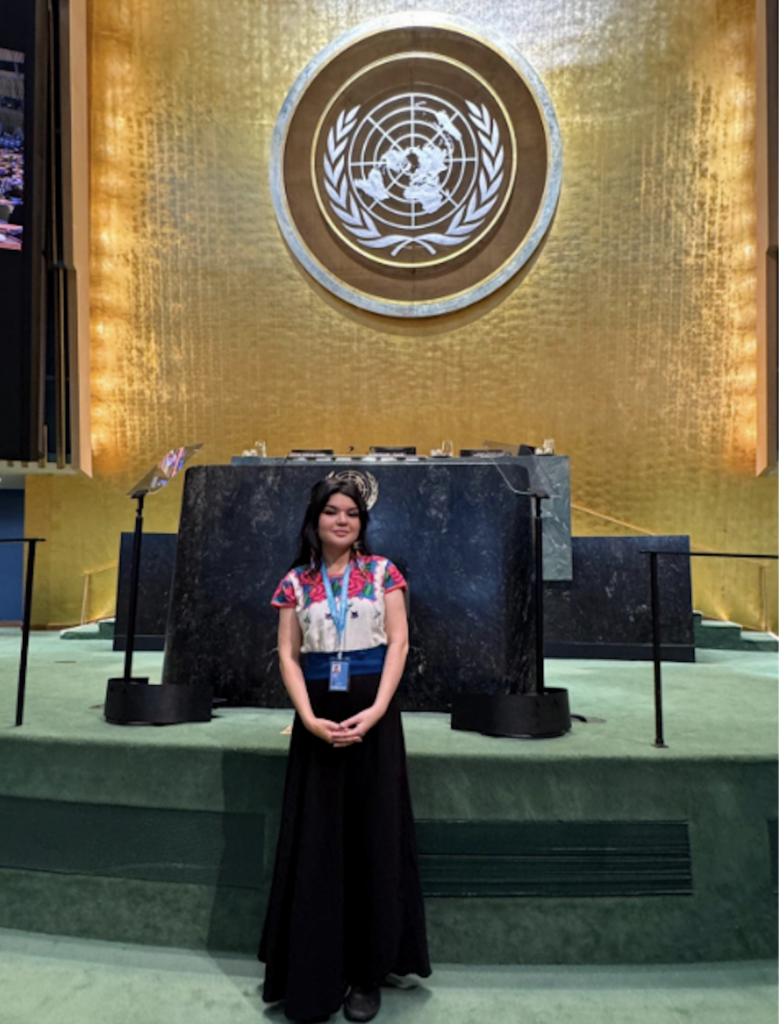
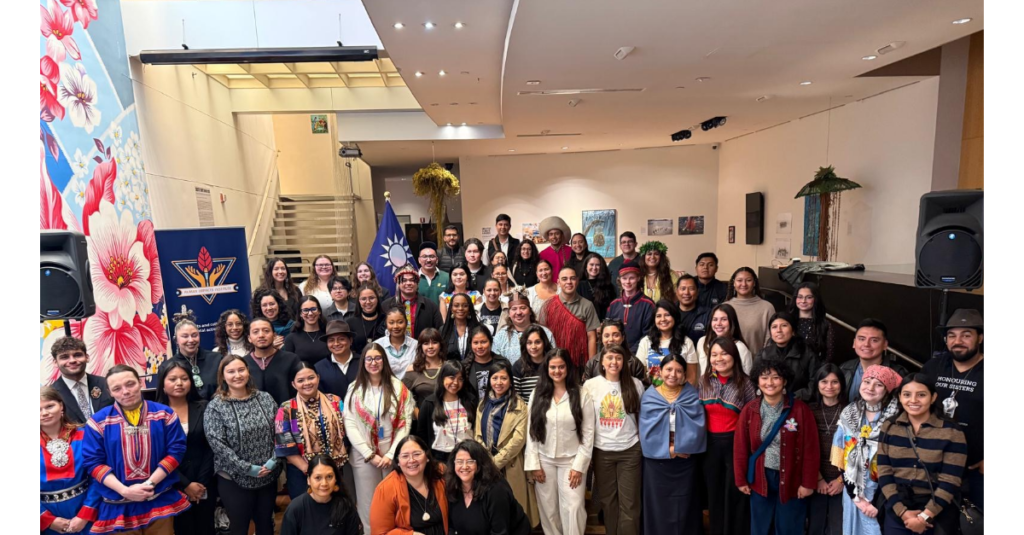
I had an opportunity to attend the United Nations Permanent Forum on Indigenous Issues (UNPFII), which took place April 20 to May 1st. The Permanent Forum is a specialized body within the United Nations, the world’s largest international organization dedicated to preventing conflict, resolving global issues, and protecting human rights. Within this framework, the Forum specifically represents the concerns and rights of the world’s Indigenous people, serving as a global voice for over 370 million individuals across 70 countries.
This was my first time seeing how decisions are made on a global scale. It showed me why presence and unity matter so much. Getting an education is a privilege, and the road to get there requires resources and a deep support system that many of our people are denied. But in that room, those barriers shifted. Seeing Indigenous people fly in from all over the world, watching language and cultural differences give way to a shared understanding, has changed how I look at community.
It inspired me to see youth refuse to be passive listeners, choosing instead to dictate their own stories.
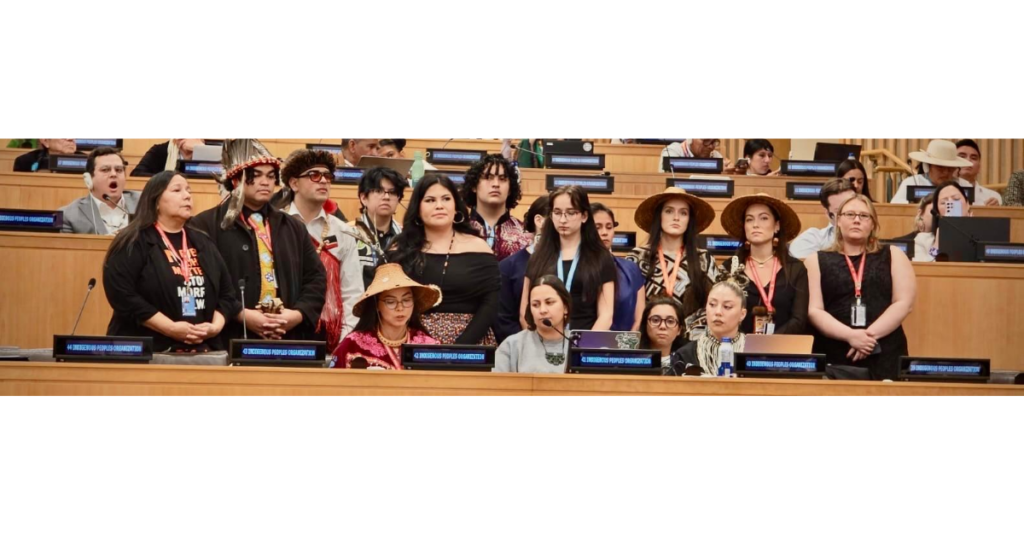
The most powerful part was watching Indigenous youth stand up for their people. My favorite memories are from standing right beside them during their interventions. In these UN sessions, an intervention is a formal statement read directly to the floor. It is a tool used to force our specific realities and demands onto the official global record so they cannot be ignored. Standing there with them, hearing their voices fill that massive room, felt incredibly powerful. It inspired me to see youth refuse to be passive listeners, choosing instead to dictate their own stories.
That focus on presence and voice is exactly what drives my own work. Across non-profits, research, and tech, I focus on AI safety and the preservation of Indigenous languages. When we look at large language models, or LLMs, they rely on massive datasets scraped from the internet to predict text. They try to fit our oral histories and living languages into rigid code that cannot truly capture us. Without our data sovereignty, which is our right to control how our own data is collected and used, this technology just becomes a new form of digital colonization. It extracts our knowledge, strips away our context, and replicates the same methodical erasure I faced in the classroom.
It is essential to question the development of this technology relentlessly. We have to ask who is being included in its development, and what its real effects are on our society. AI can be used as a tool for good, but the pendulum constantly swings from a useful case to deep distrust. Look at healthcare. AI is currently being used in radiology to accelerate scan times, improve image resolution, and mitigate human errors. But does an increase in scan speeds mean better accessibility for people who cannot afford care? The real and harsh answer is no. Most of the time, the technology is deployed only to generate more capital. Meanwhile, problems like medical racism and algorithmic bias get amplified because marginalized communities are missing from the data models entirely.
The systems take what little information they have about us, distort it and return it to us as weapons. When we are not in the room, technology does not serve us. It just automates our exclusion.
The systems take what little information they have about us, distort it, and return it to us as weapons. When we are not in the room, technology does not serve us. It just automates our exclusion. Changing who is in the room means removing the barriers that keep us out. Financial hurdles are often the biggest obstacle to accessing these global spaces. So much of what I have been able to do is simply because someone believed in me and chose to support me.
I want to give thanks to the Ban Ki-moon Foundation for the guidance, support, and the opportunity to go to the UN. I also want to give a special thanks to Tenah and Chad Dryer of Future Allies. Without their support, I would not have had this experience. They helped clear the path so I could step into that room.