
 Champions for Change
 Remembering Our Sisters
 Brave Heart
 California Native Youth Collective
 Building Communities of Hope
 Creative Native
 Democracy is Indigenous
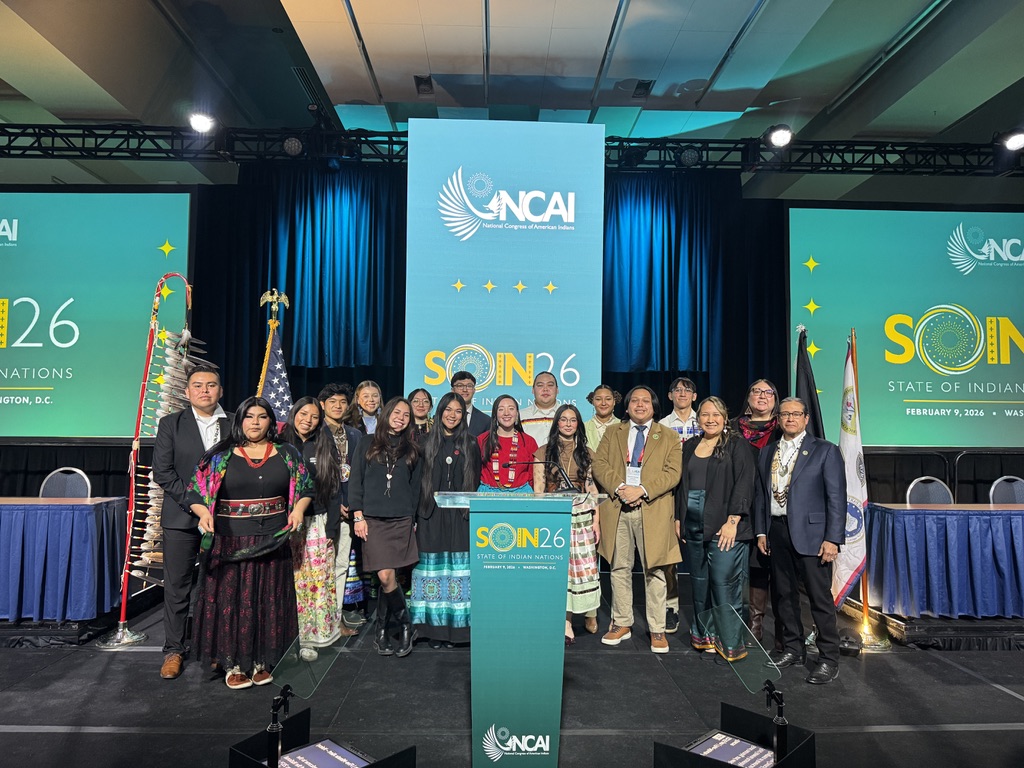
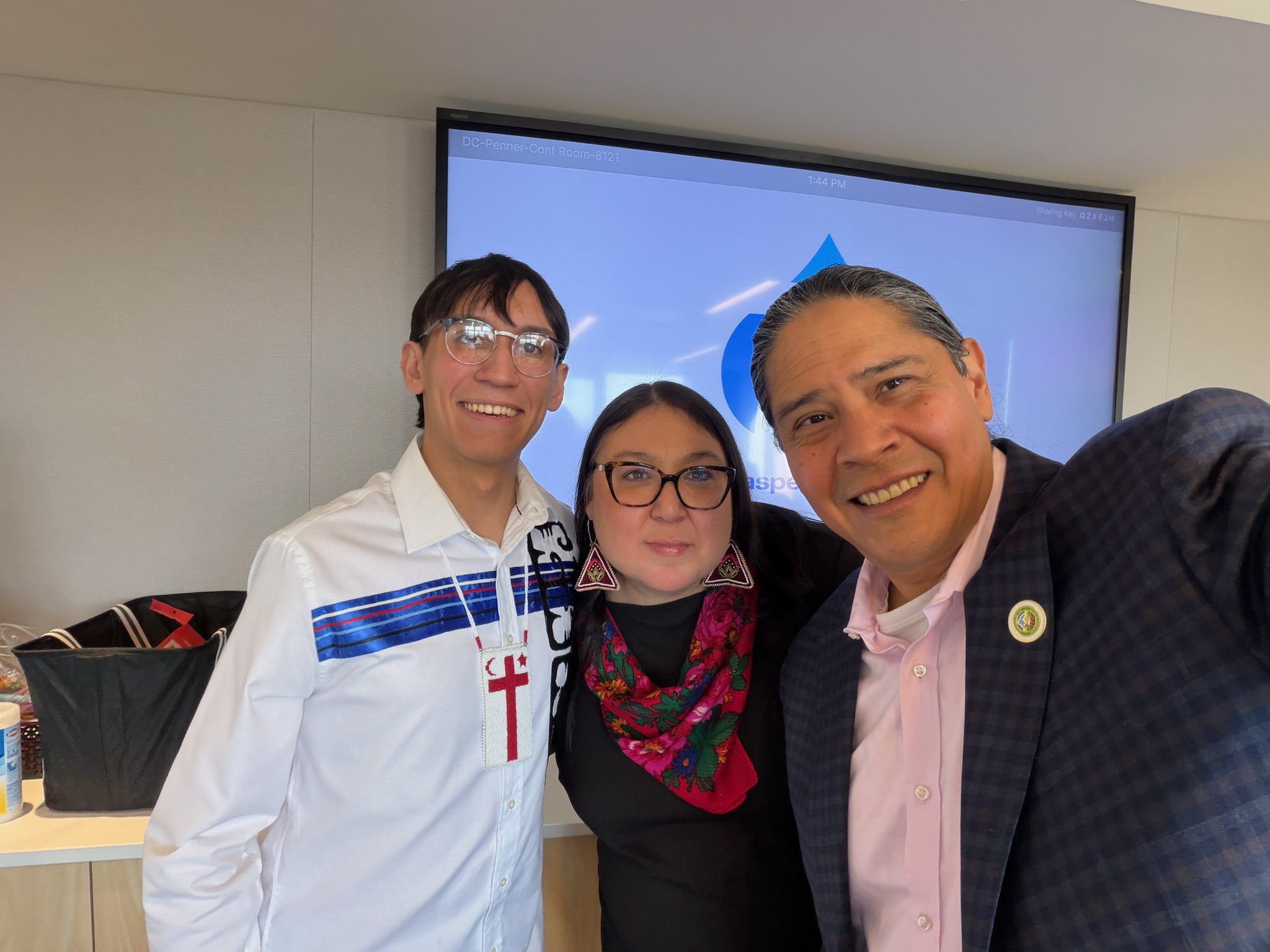
In mid-February, the six 2026 Champions for Change – Sebastian April (Mi’kmaq), McKaylin Peters (Menominee), Zianne Richardson (Haliwa-Saponi), Kaylah Toves (Kanaka Maoli & Acoma Pueblo), Summer Wildbill (Confederated Tribes of the Umatilla Indian Reservation) and Moses Wiseman (Village of Chefornak) – met in Washington, DC for their first in-person gathering. Joined by two youth representing the Phoenix Indian Center – Tamira “TJ” (Navajo) and Aaliyah (Quechan & San Carlos Apache) – and their chaperone Te’anne Sandoval, the Champs spent the week getting to know one another, honing their public speaking skills and advocating for issues closest to them on Capitol Hill. 2025 Champions for Change and current Youth Advisory Board leadership Katie Lynch (Potawatomi) and Joshua Ching (Kanaka ʻŌiwi & Uchinānchu (Okinawan)) served as mentors throughout the week, sharing their wisdom and providing support to the new class.
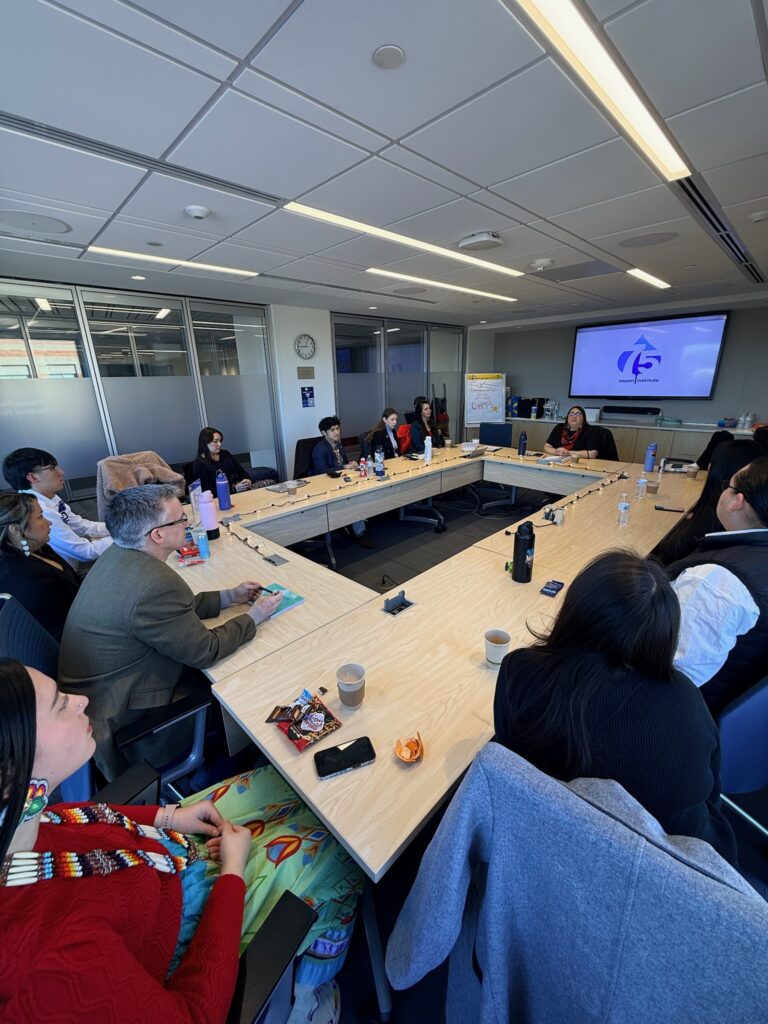
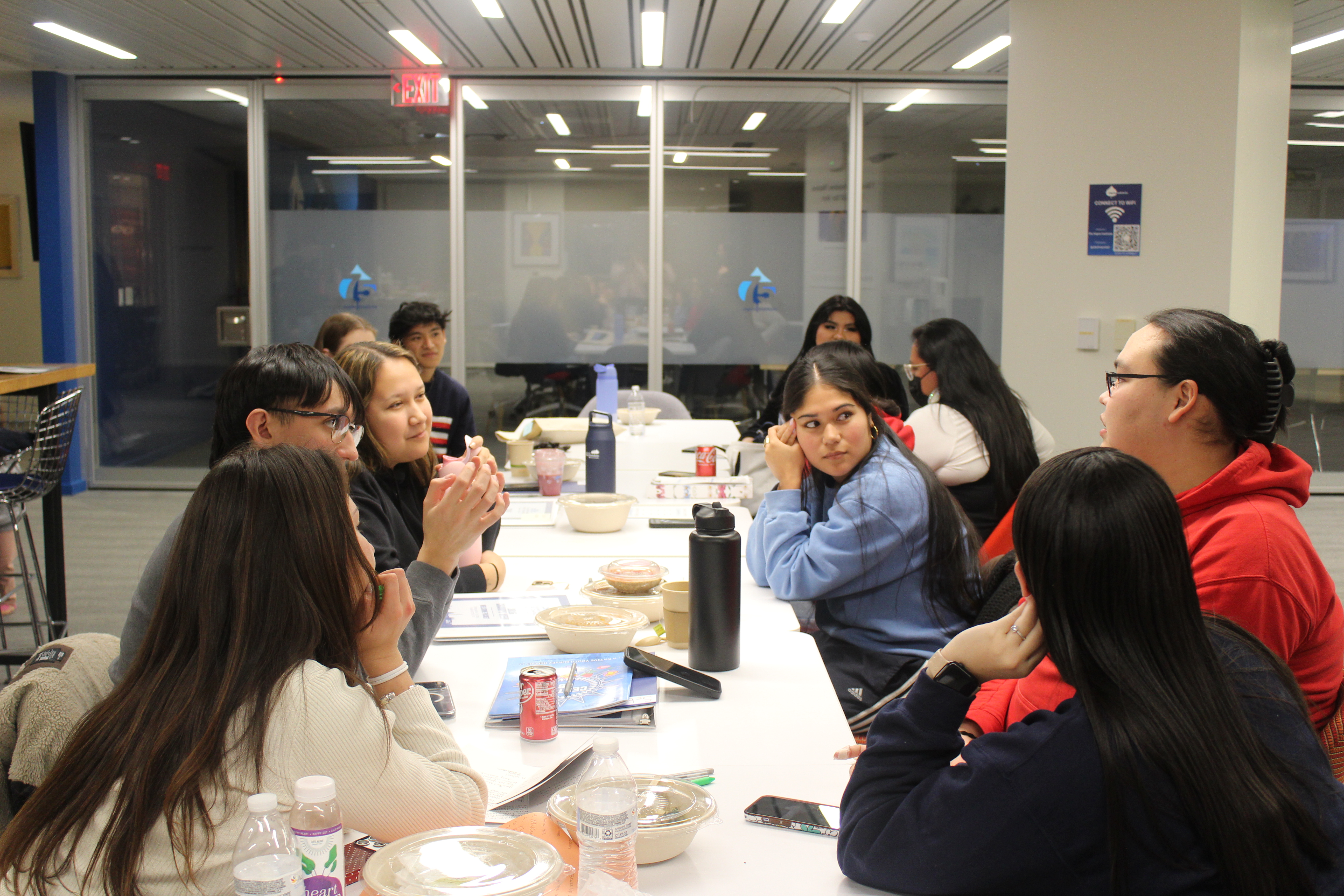
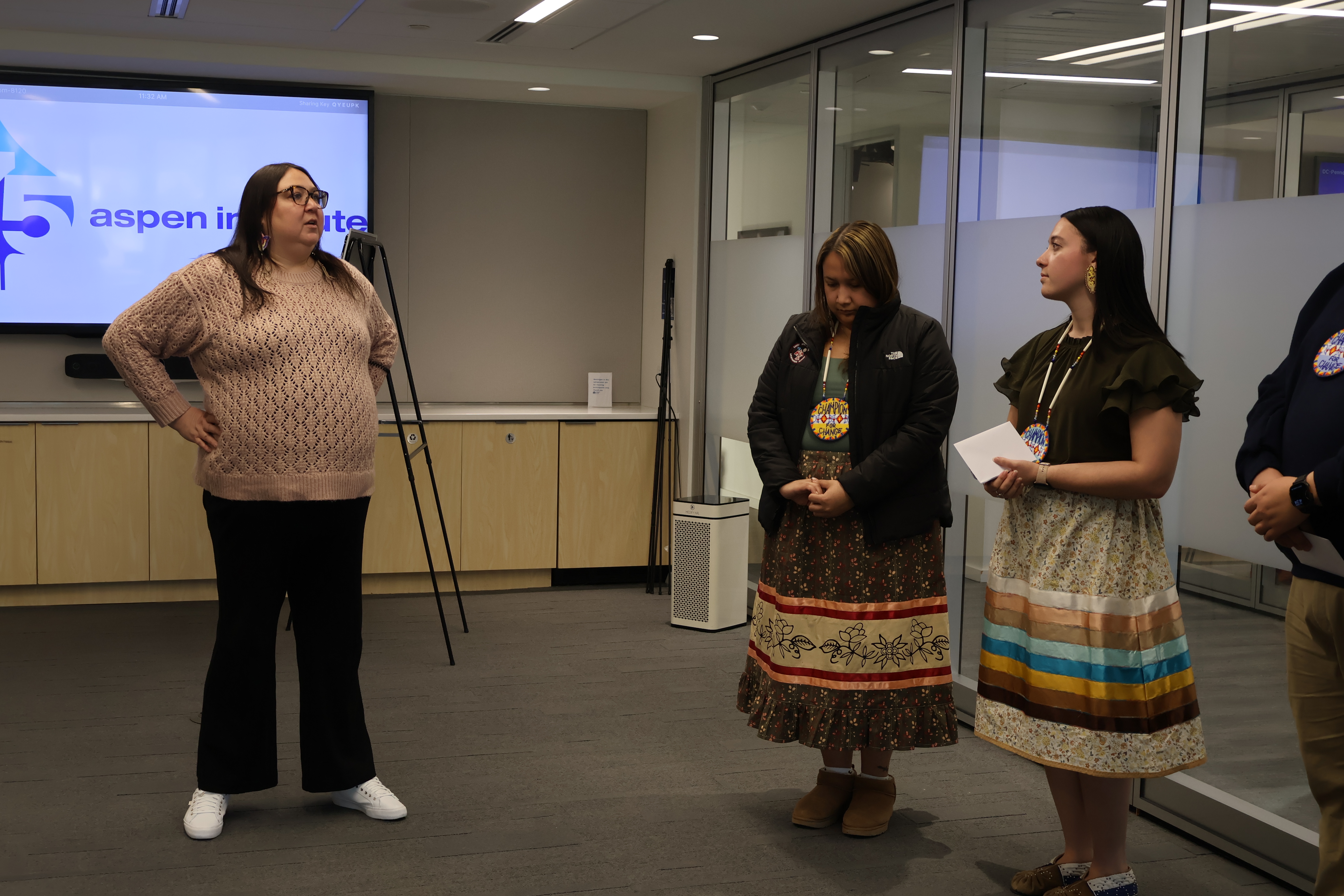
At an informal dinner hosted at the Aspen Institute headquarters on Sunday evening, CNAY staff welcomed the 2026 Champs to DC, reviewed the packed agenda and started off the four-day-long convening with good medicine: music, food and laughter.
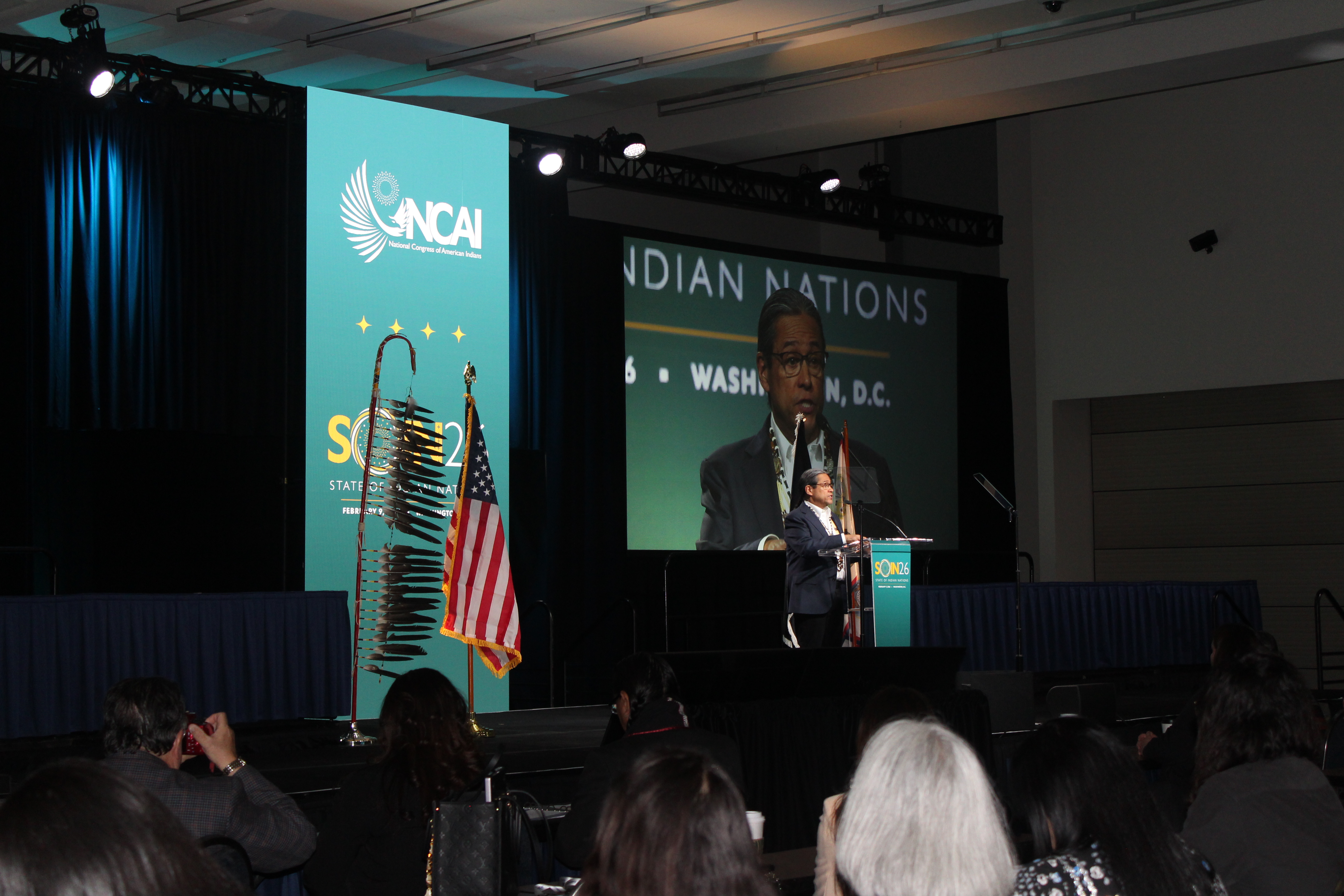
Executive Director Tracy Goodluck (Oneida Nation of Wisconsin & Mvskoke Creek) officially kicked off Champs Week 2026 with welcome remarks, reminding Champs that they “are not Champions for Change by mistake, but because their ancestors prayed for them to be here in this cohort together.” The Champs then joined attendees of the National Congress of American Indians (NCAI) Executive Council Winter Session for the State of Indian Nations (SOIN) address at the Walter E Washington Convention Center. NCAI President Mark Macarro addressed the impressive crowd of Tribal Leaders and other influential community members from across Indian Country with a distinct call to action. “In every challenge there is opportunity, and we gather with a unified purpose: to build a strong and sustained tribal movement to protect the sovereignty of our Nations.”
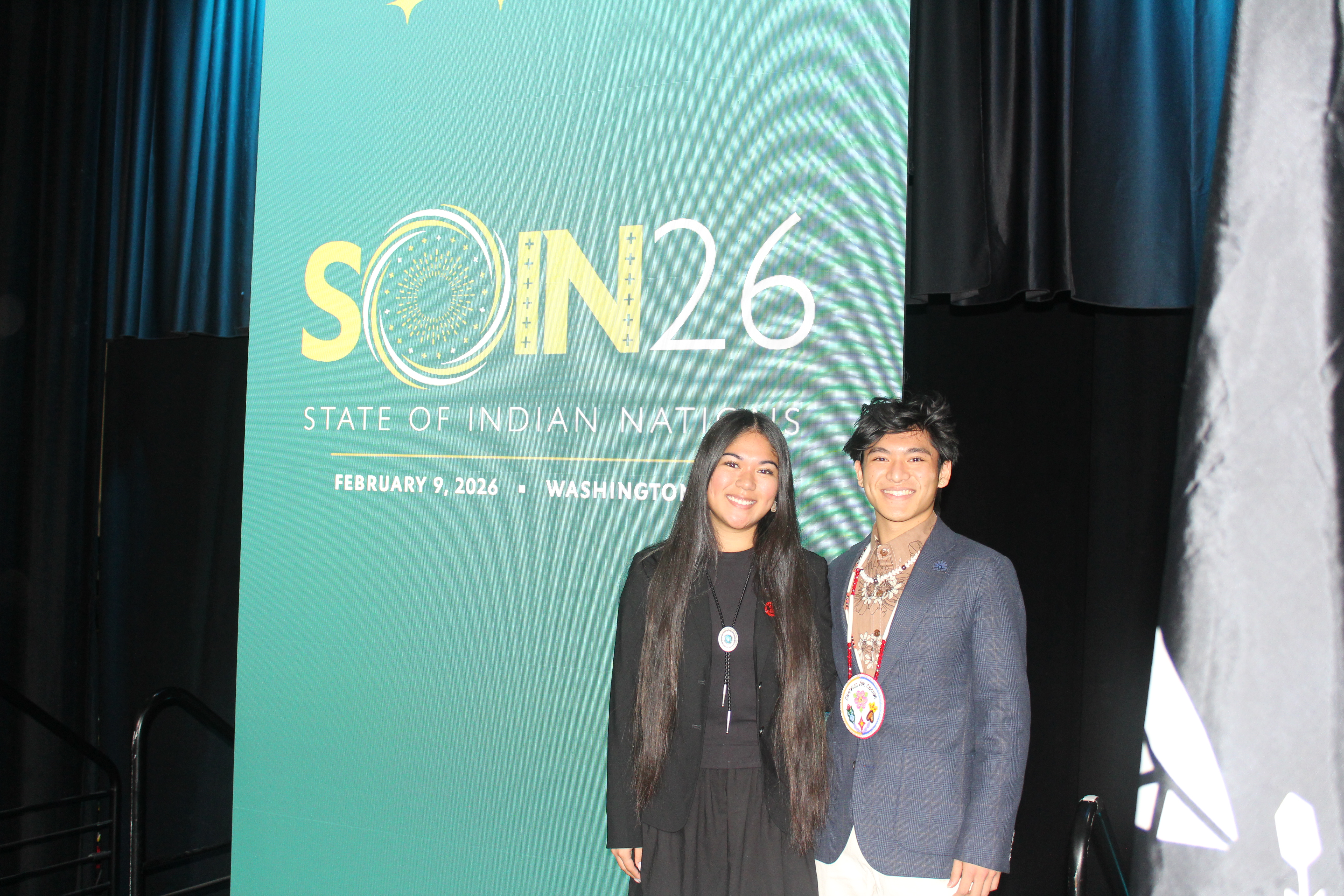
The NCAI Youth Commission Officers Jonas Kanuhsa and Angelina Serna also addressed attendees with a moving sentiment on how we must show up for one another. ”In our cultures, leadership has never been about standing above others – it has always been about standing with them,” said Serna.
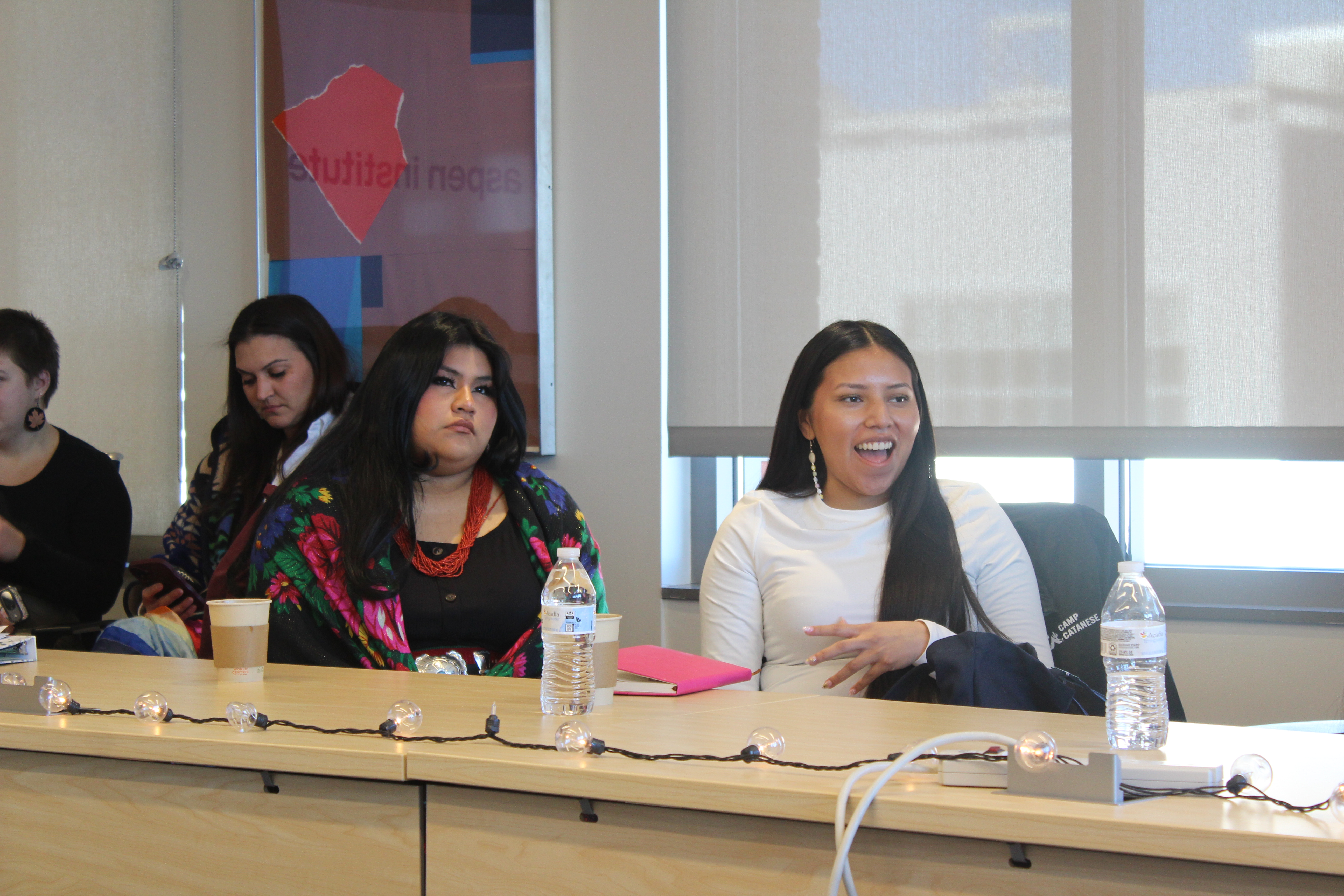
Returning to the Aspen Institute, we debriefed about what we heard (and what we didn’t hear) at the SOIN – providing Champs an opportunity to reflect on the experience and think critically about this avenue of leadership. Each 2026 Champion for Change then presented a 5-minute “TedTalk” – introducing themselves and their platforms to their fellow Champs, staff and other guests, including Center for Rising Generations Vice President Pete Weber. Meanwhile, youth from the Phoenix Indian Center participated in a Democracy is Indigenous training session, learning more about civic engagement and developing ideas for community projects.
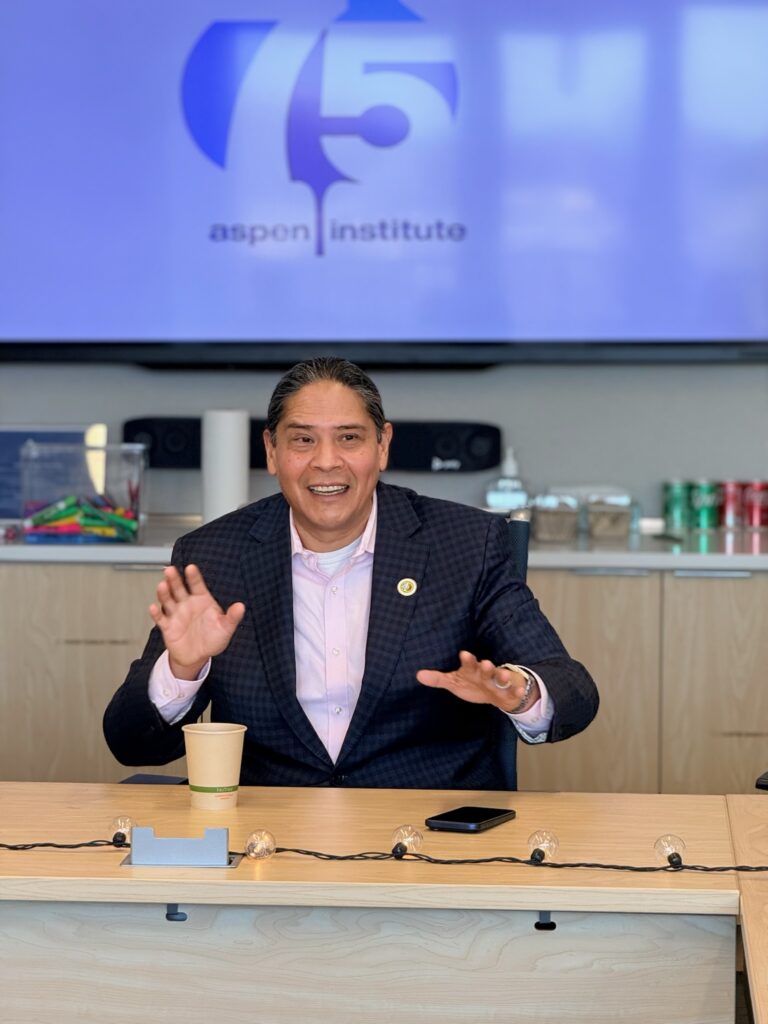
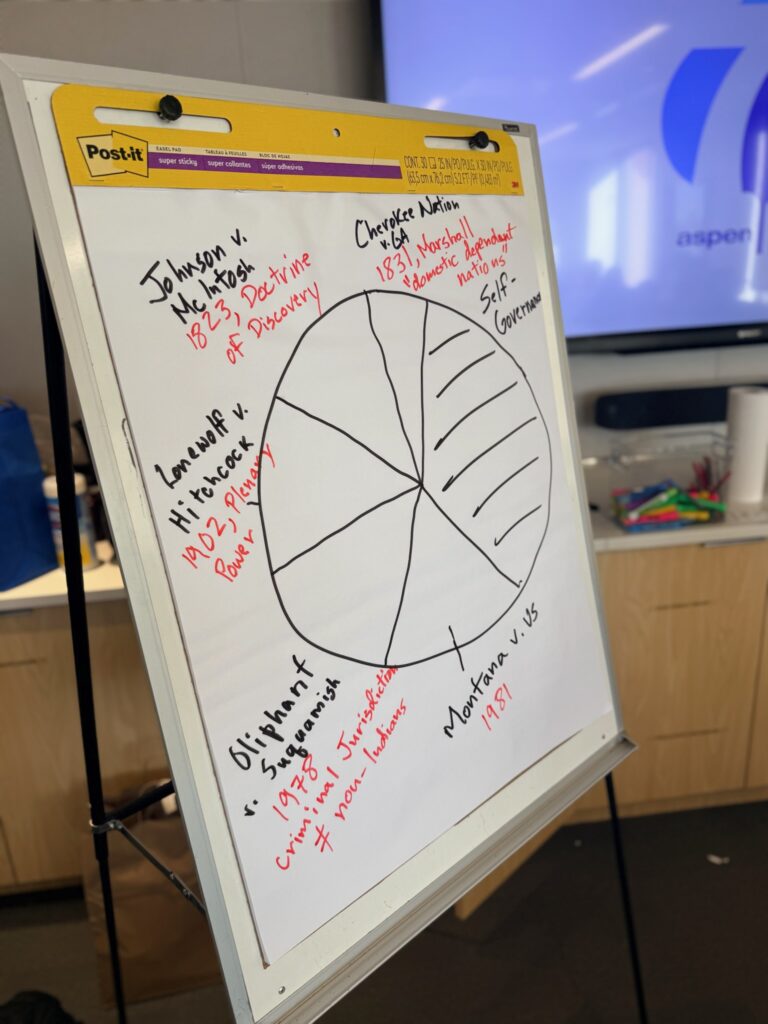
Monday’s programming culminated in a pilot of a new CNAY leadership initiative called The Future Tribal Leaders’ Sovereignty Institute, led by Director of Policy & Strategic Initiatives Christina Kracher (Little Shell Chippewa Tribe of Montana). Designed for Native youth who aspire to serve their Tribal Nations as future leaders, decision-makers and Nation builders, sessions focused on building practical understanding of sovereignty not just as a concept, but as it operates in real life – legally, financially and institutionally. Jonodev Chadhauri, who serves as Ambassador of the Muscogee (Creek) Nation, guided Champs through Tribal Sovereignty and Self- Determination 101, featuring the famous “sovereignty pie.” Then, Dr. Francis Arpan – Vice President of Student Support at Western Iowa Tech Community College – and Tana Fitzpatrick – University of Oklahoma’s Associate Vice President of Tribal Relations – walked us through Sovereignty in Action: Examples from Higher Education. The first full day ended with a lively group dinner at Brazilian steakhouse Fogo de Chão.
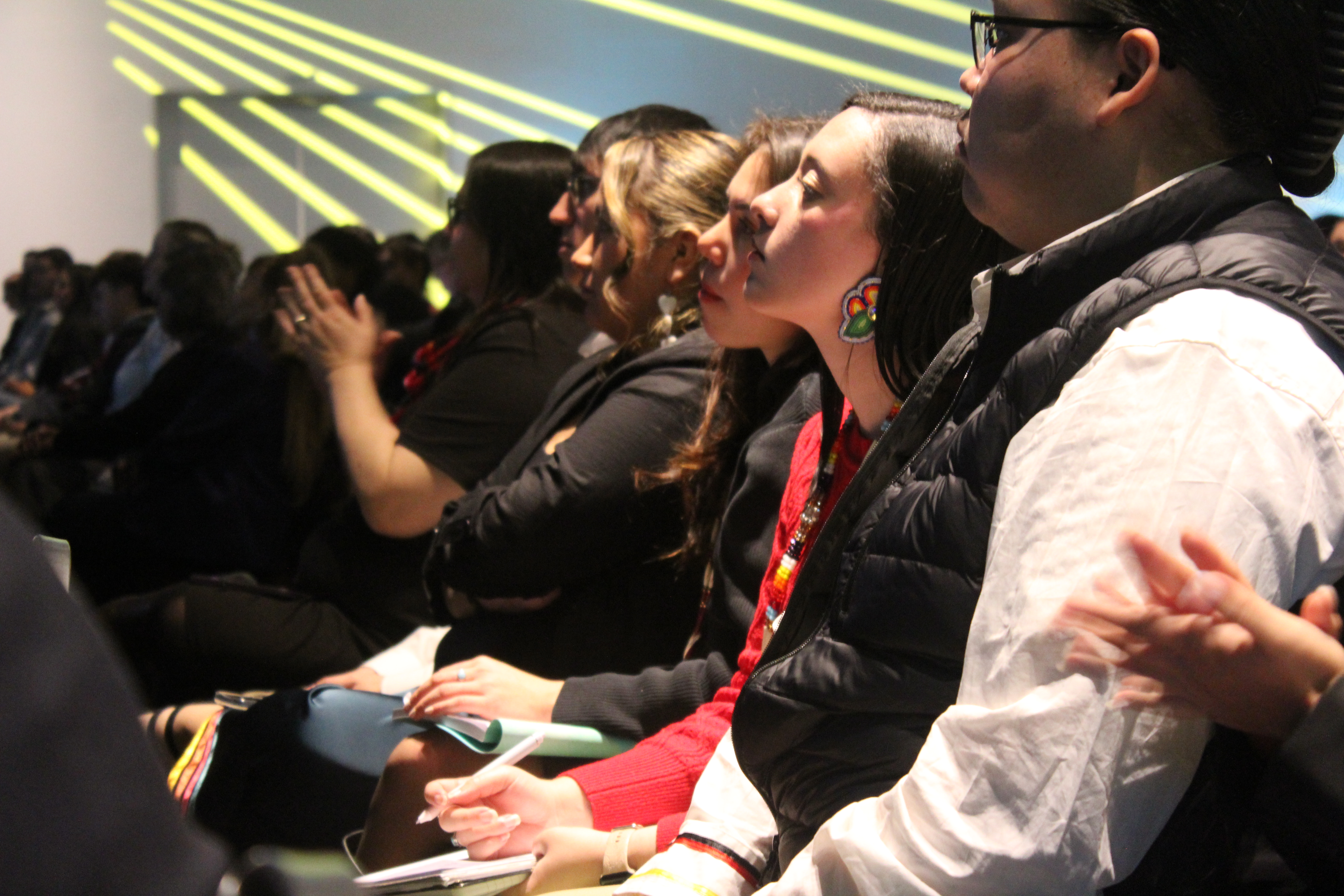
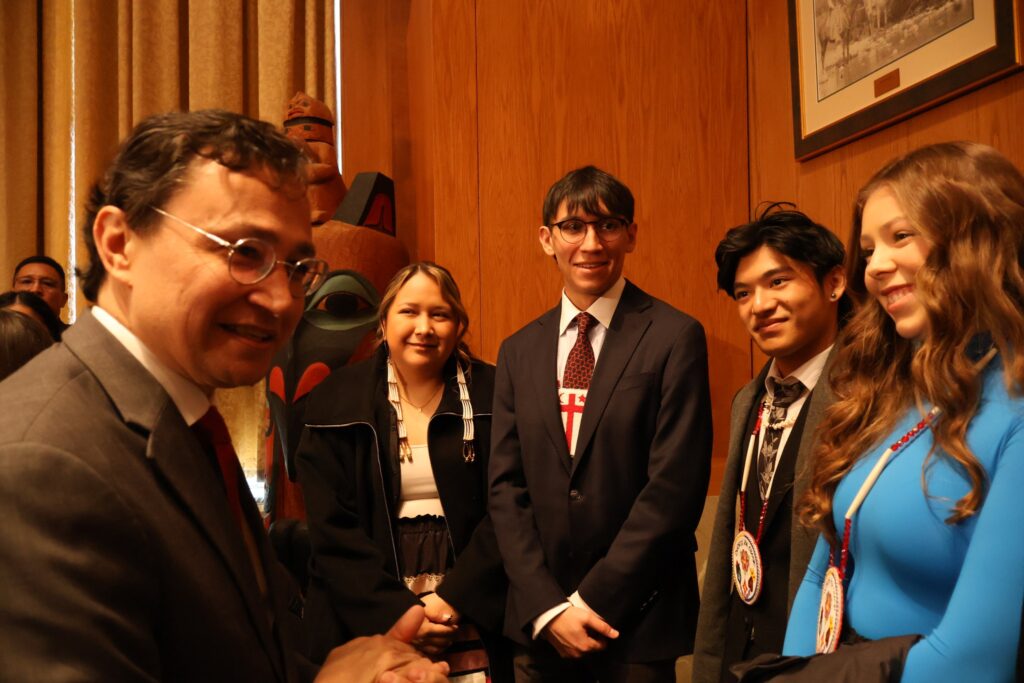
While Tuesday was punctuated most memorably by the Champs’ first public speaking event as a group – the 2026 Champions for Change Panel Discussion – we began our second full day, the Champs and Phoenix Indian Center youth attended the Senate Committee on Indian Affairs (SCIA) oversight hearing, “Economic Self-Determination in Action: Examining the Small Business Administration Native 8(a) Program.” Senator Lisa Murkowski (R-AK), Chair of SCIA, greeted the crowded room. Participants then heard testimony from a panel of experts, including Chuck Hoskin Jr., Principal Chief of the Cherokee Nation; Katherine Carlton, President of the Chugach Alaska Corporation and Policy Chair of the Native American Contractors Association; Polly Watson, Vice President of Operations at the Bristol Bay Native Corporation; and Cariann Ah Loo, President of the Native Hawaiian Organizations Association. Champs had the opportunity to meet with Chief Hoskin and introduce themselves after the hearing concluded.
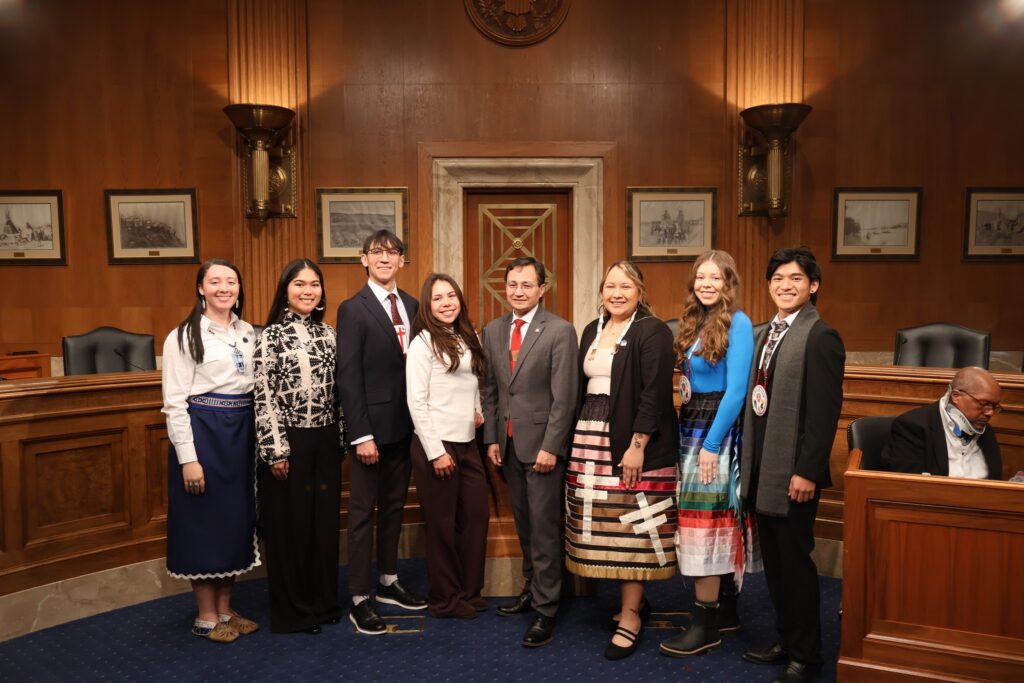
After a reinvigorating lunch and a hearing debrief at Bluestone Lane, Champs received some public speaking tips and tricks from Communications Manager Jamie Levitt. They each worked on their “elevator pitches” and zeroed in on key talking points for their upcoming panel, reception(s) and Hill Day meetings. Staff then surprised the Champs with a preview of their custom medallions, hand beaded by Alexa Rae Day, so they could wear them for the public panel before their official bestowment at a ceremony later that evening.
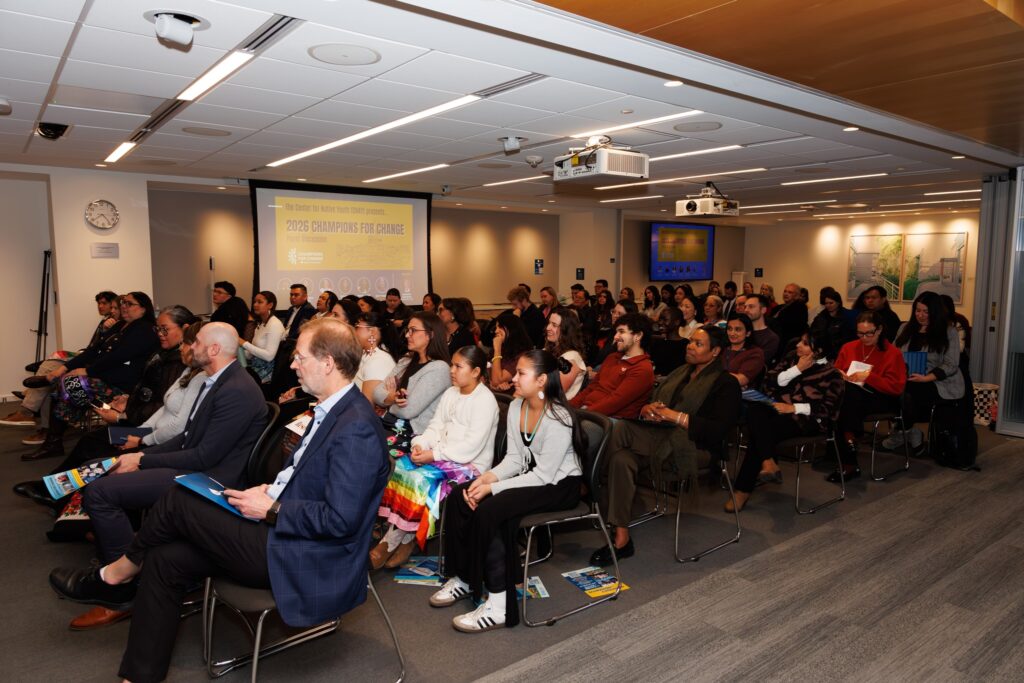
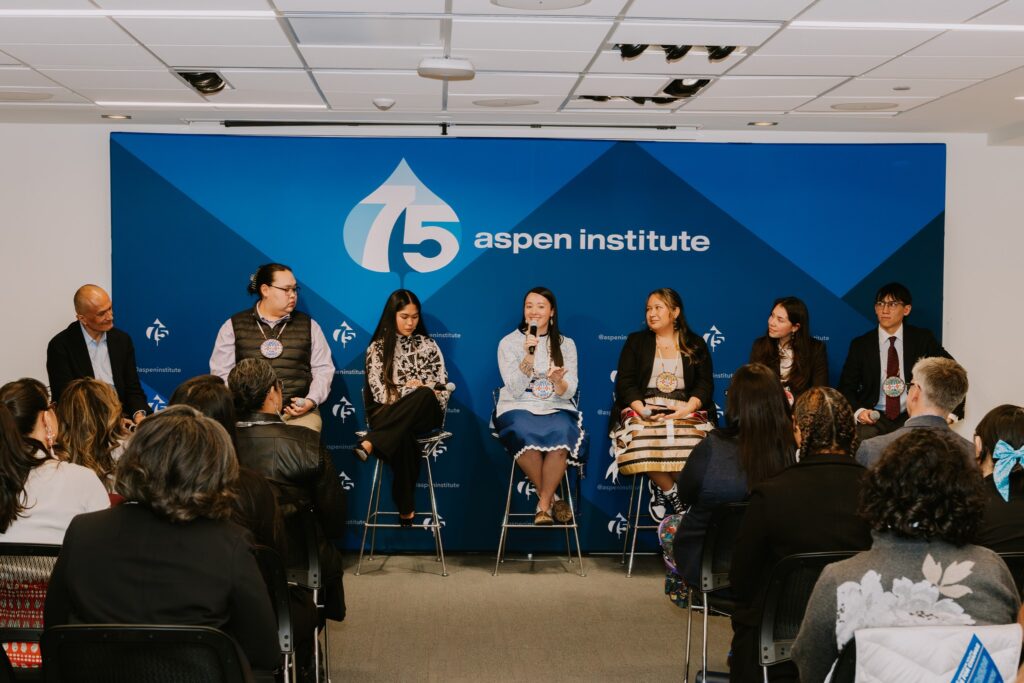
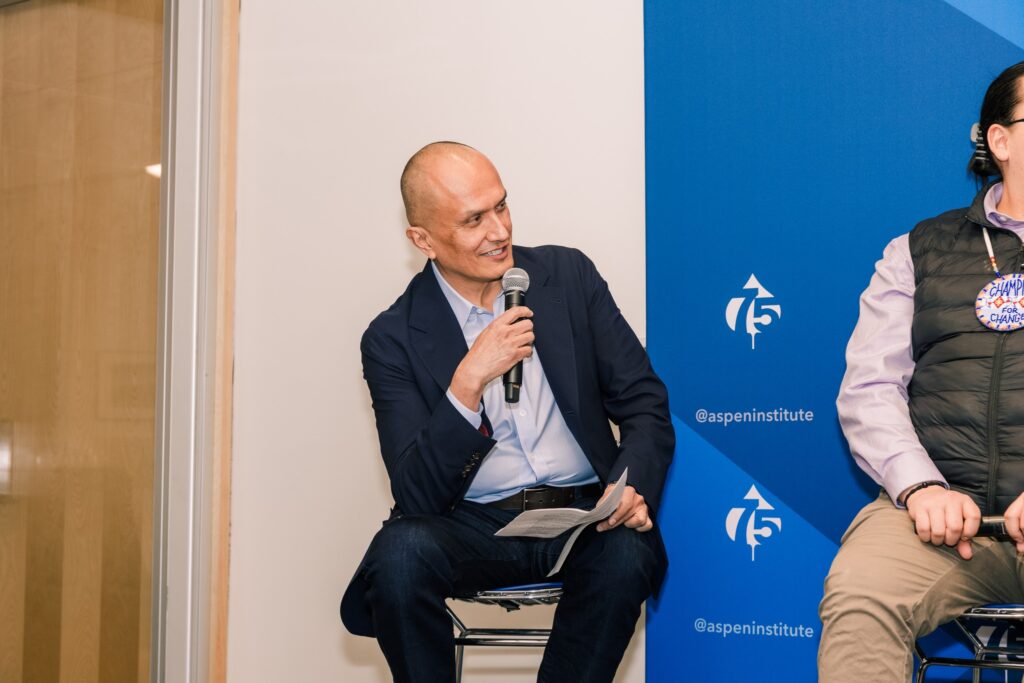
Shortly before 4:00pm, the Aspen Institute office was buzzing with a crowd of Tribal leaders, partners, members of the media, friends, Aspen Fellows and staff from programs across the Institute – all excitedly gathered to hear from the Champs about the issues impacting young people across the country. Dawson Her Many Horses (Rosebud Sioux Tribe of South Dakota), 2023 Alumni of the Aspen Institute Finance Leaders Fellowship and Managing Director at Wells Fargo, moderated the lively panel discussion, which was also livestreamed so communities from across Indian Country could actively participate.
To begin, Tracy Goodluck and Daniel R. Porterfield, President & CEO of the Aspen Institute, welcomed our guests, reflecting on the history of the Champs’ program and the magnitude of the youth onstage. Champs fielded individual and group questions about their areas of expertise, the importance of youth leadership and their personal journeys to advocacy.
Summer talked about her own resilience and ability to show up in her power, gaining a newfound confidence from other youth she surrounds herself with. She recognized the recurring topic of humility, noting that her fellow Champs do not talk about their stories for recognition, but to strengthen our communities through advocacy in the places where they see disparities.
There’s a lot of ignorance about what being Native means when you leave the ‘rez.’ I feel it’s my job to center my work in my Indigenous identity.
Shifting the conversation to education, Zianne Richardson acknowledged that she wanted to become the teacher she needed growing up. She dove into how Haliwa people are not only inherent storytellers but truthtellers, and how important that quality is in a classroom. Looking back at her own educational journey solidified her drive to teach in her home community.
You cannot have leadership without fellowship. That’s why I lead with humility and Haliwa-Hospitality.
Kaylah Toves, a senior at Cornell University, emphasized how she brings “kuleana,” the Hawaiian value of “responsibility,” into every space. She focused on how connection with each other, rather than the individual self, leads to a thriving community. Coming from a cultural immersion school, Kaylah uses her background to advocate for traditional practices in higher education.
It is so important for Indigenous youth to learn their culture and be able to relate to the world around them through the lens of their traditional teachings.
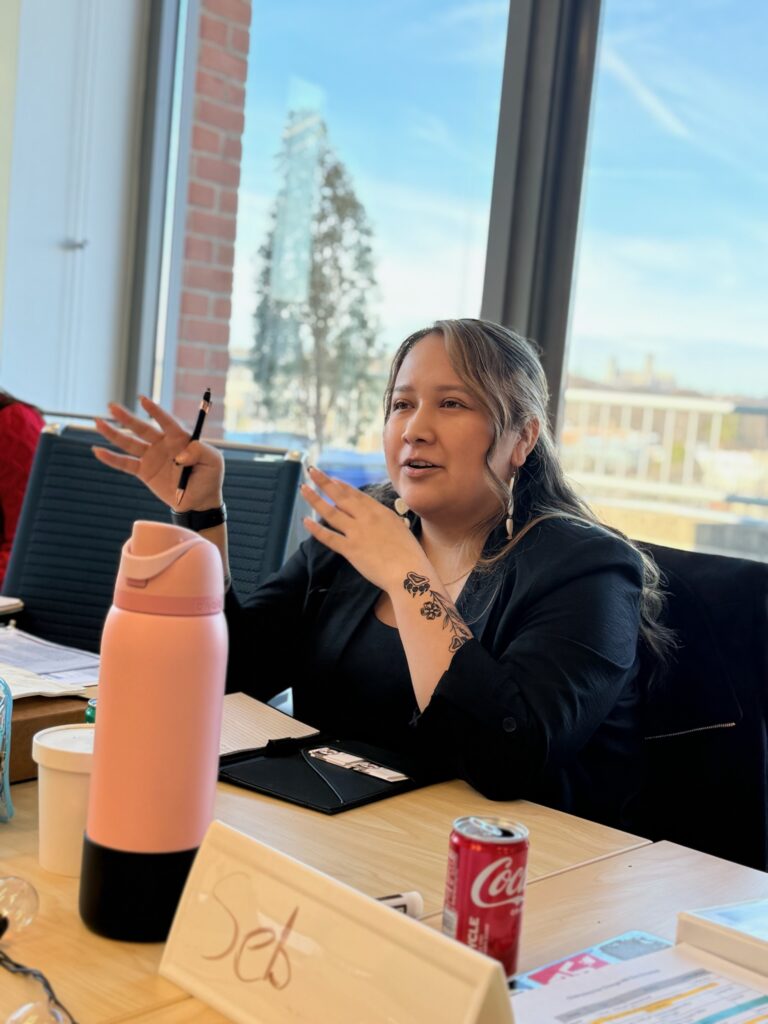
For Sebastian April, the topic of economic development for Tribal Nations is always at the forefront. By visiting various communities across Indian Country, many with booming economies, he seeks to explore more ways he can use his educational background in plant science and cannabis cultivation to advance not only Mi’kmaq communities, but others throughout the northeast as well.
I see a lot of resilience and a lot of passion in Native youth. We carry the knowledge of what came before us.
McKaylin Peters shared her personal journey with mental health and how she has created spaces for Native youth to navigate culture as medicine and community wellness. She believes that Native youth are systems thinkers who understand how land, community and governance are interconnected.
Mental health infrastructure is an act of sovereignty. When we build systems that reflect our culture, we protect our people.
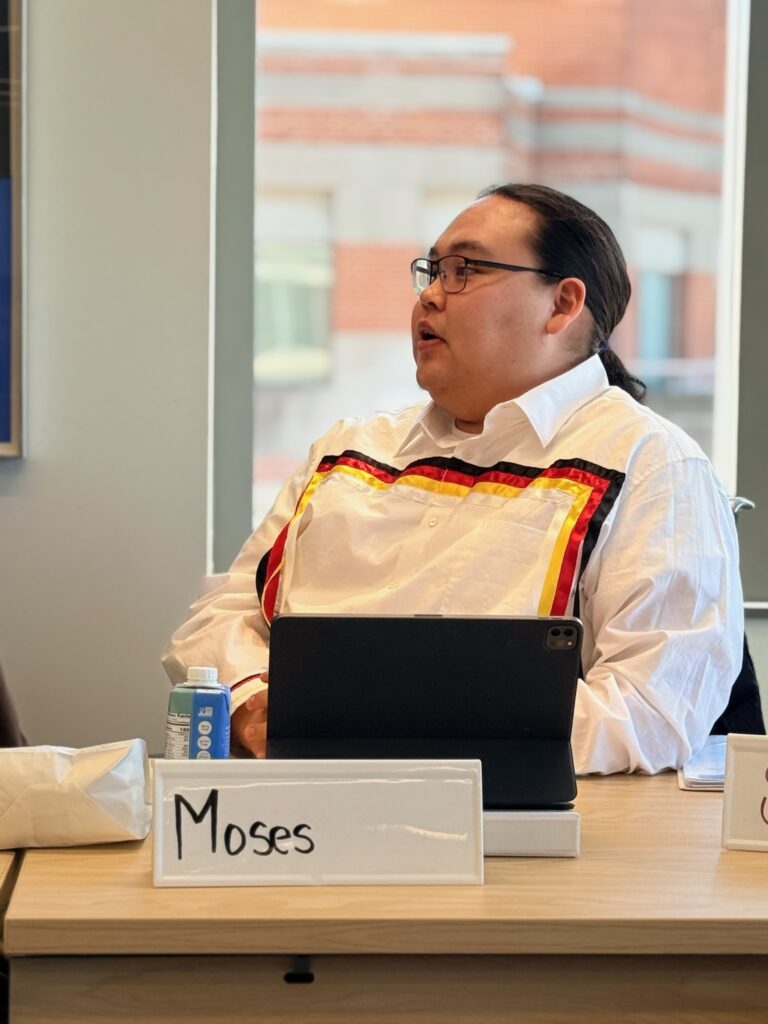
Moses Wiseman shared his passion for providing language resources to his village, and beyond. Growing up in a household that only spoke Yup’ik, he was able to recognize language barriers his community members were facing in their daily lives. Whether it be in doctor’s offices or at the DMV, he strives to provide resources for clear communications across Alaska.
Language coddles you with love and joy. It makes you feel like your ancestors are with you.
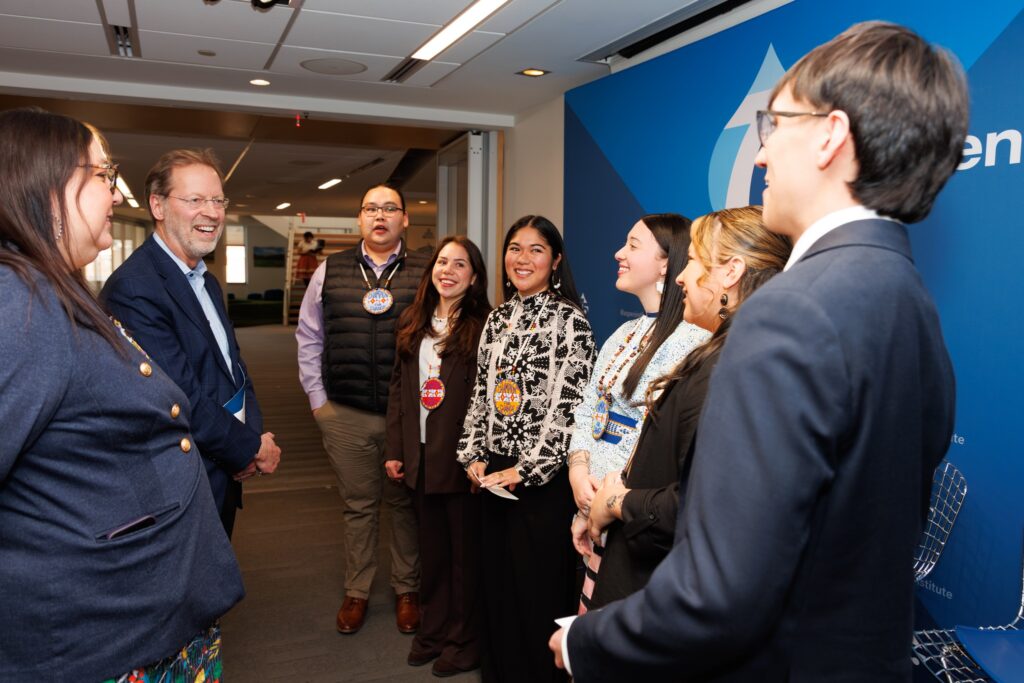
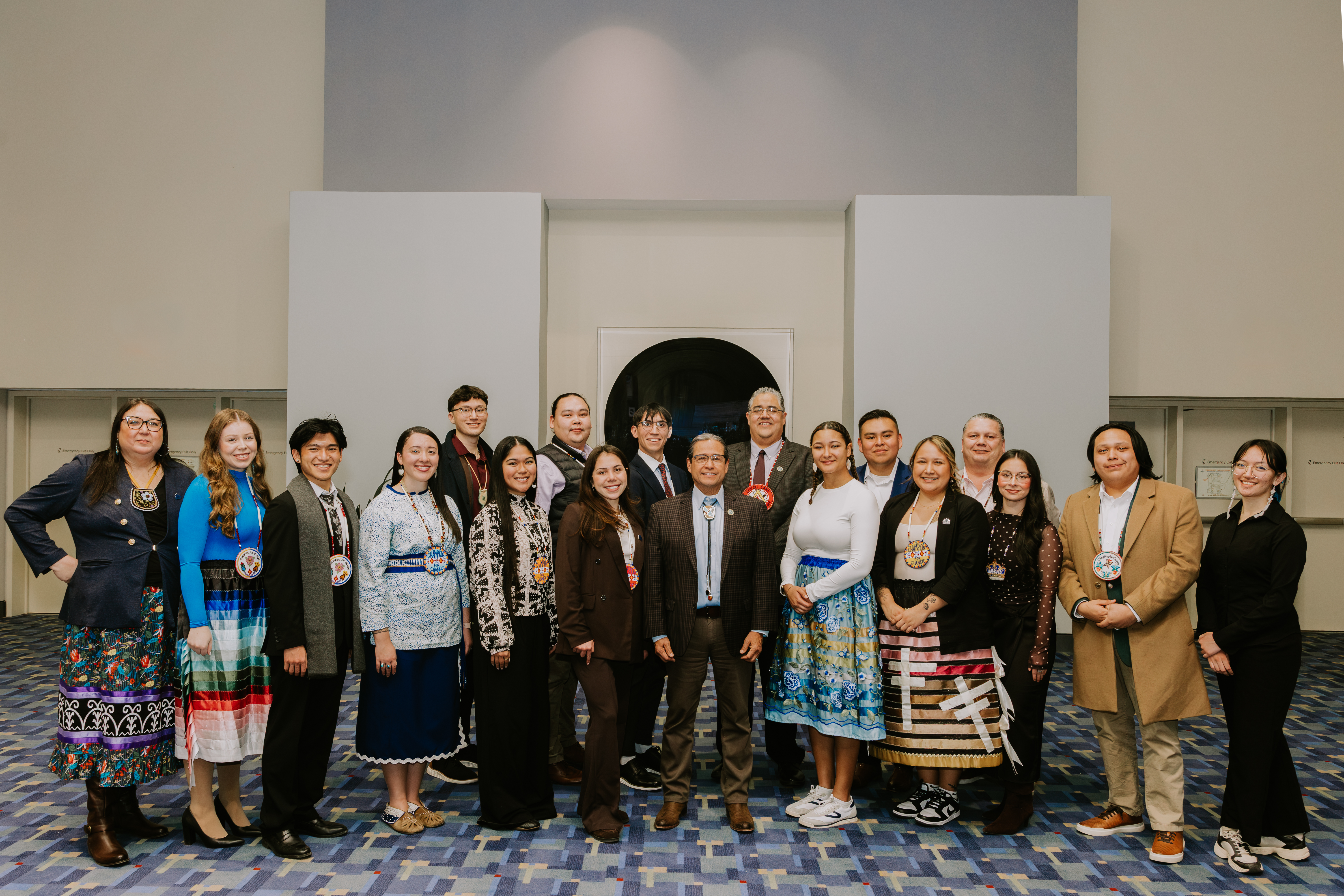
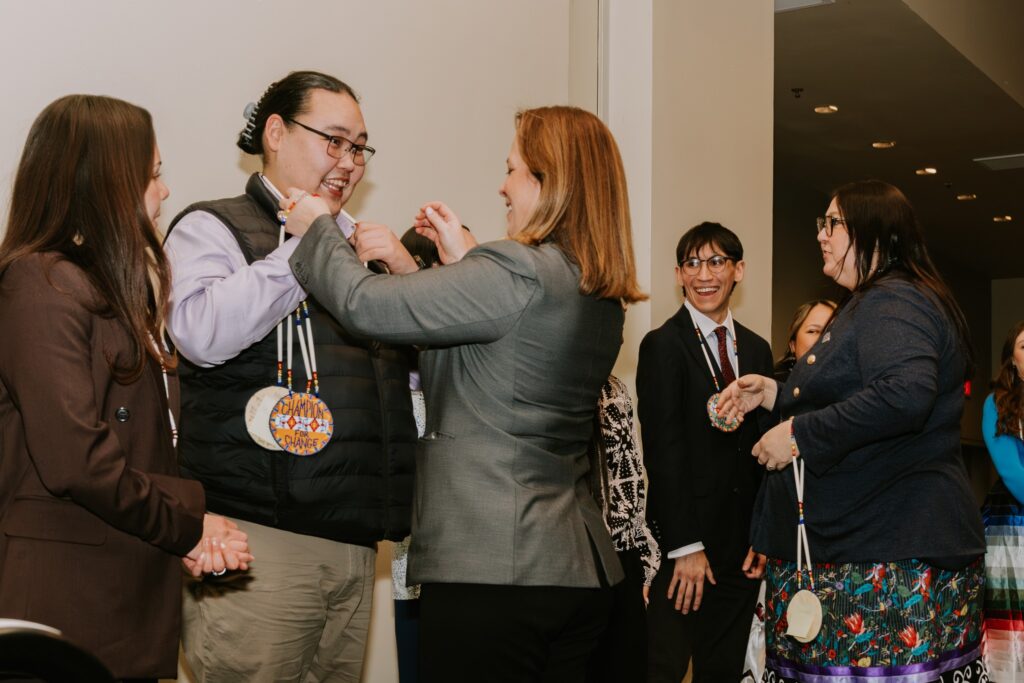
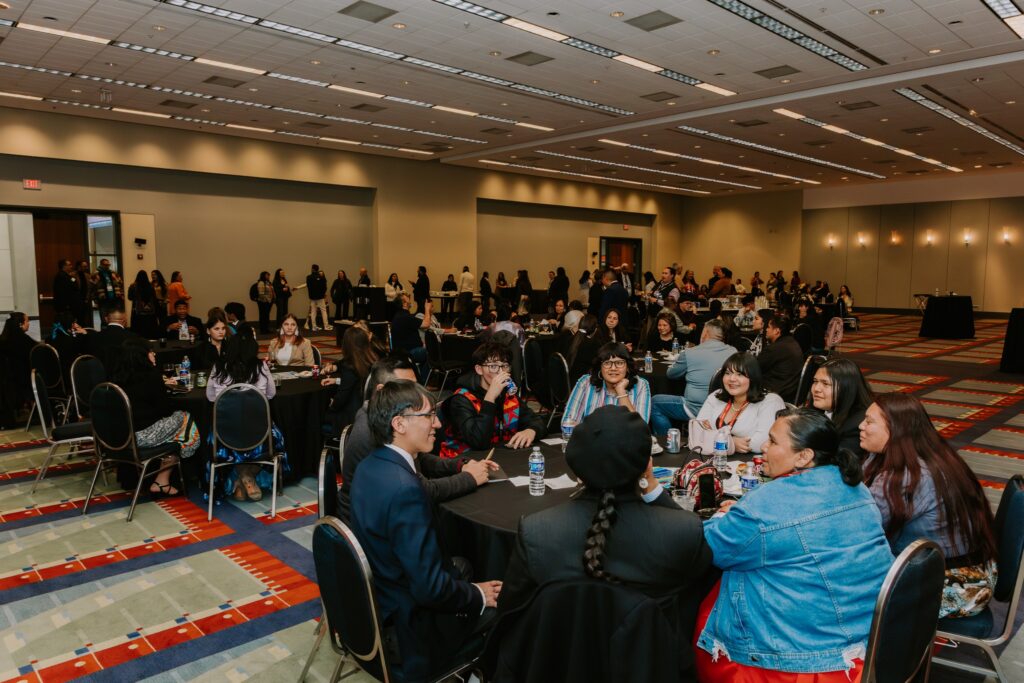
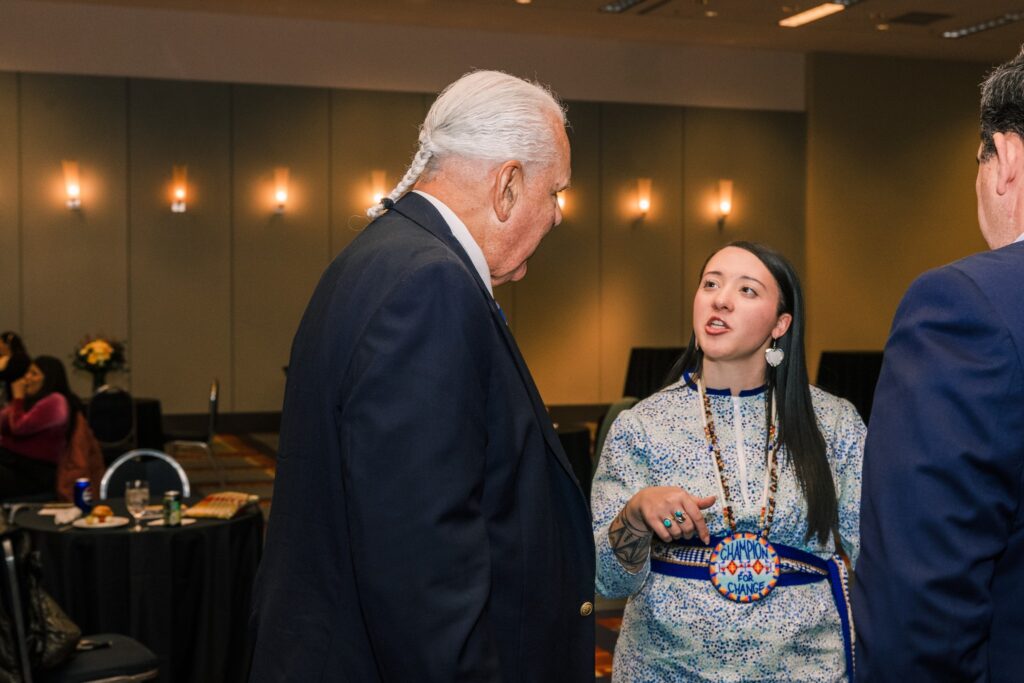
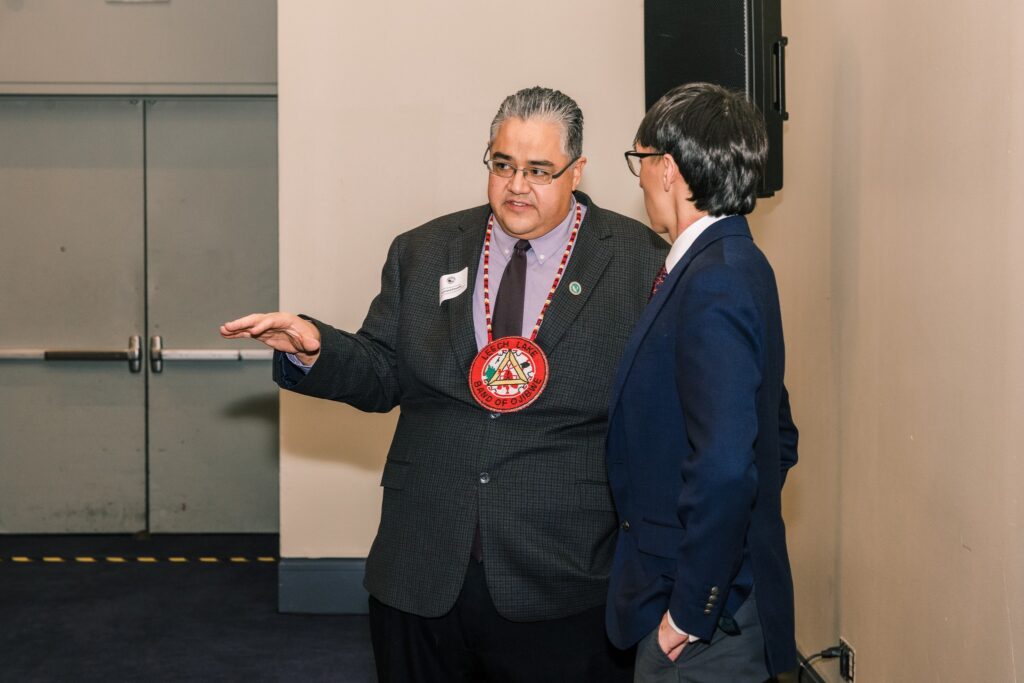
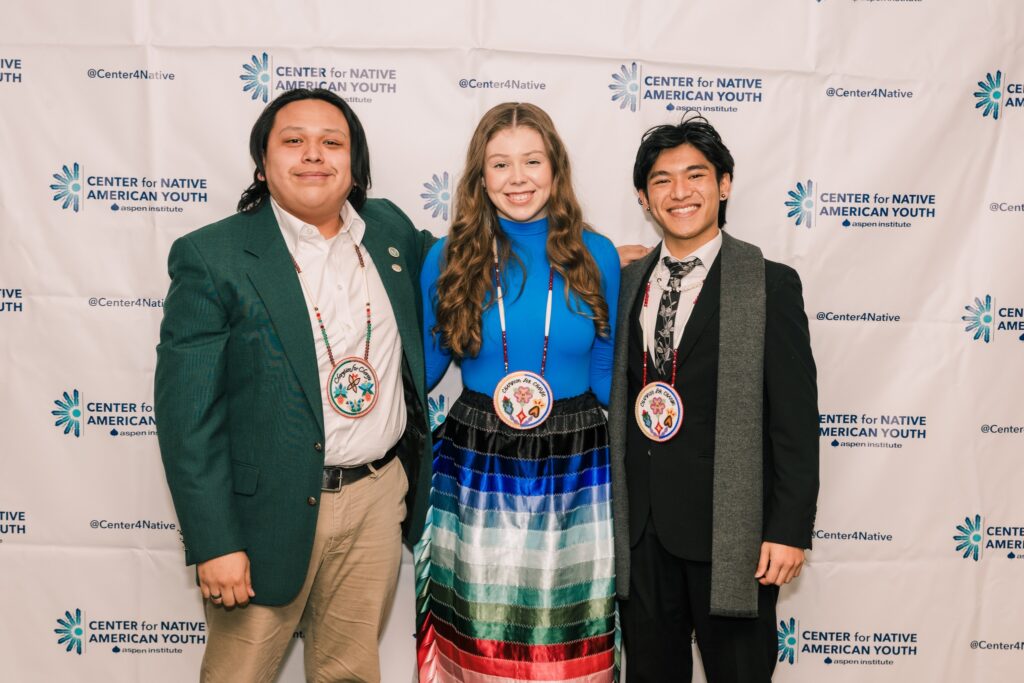
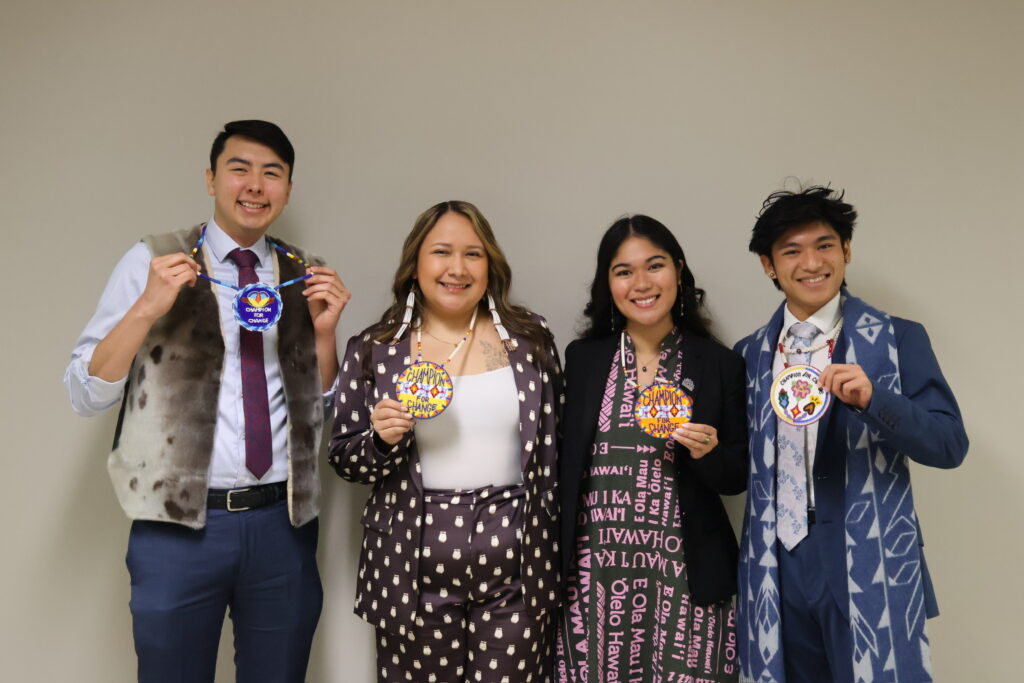
After showcasing their expertise – professionally, academically and through lived experience – and solidifying themselves as vital voices for the advancement of Indian Country, the Champs had time to mingle with the attendees before crossing town to the Walter E. Washington Convention Center for the Tribal Leaders & Future Tribal Leaders Reception, co-hosted by CNAY and the NCAI Youth Commission. Mark Macarro, Tracy Goodluck and NCAI Executive Director Larry Wright, Jr. welcomed Tribal leaders, Native youth leaders and community partners to this space of connection, mentorship and shared vision. Katie Lynch and Joshua Ching then invited the 2026 Champions for the Change to the stage to officially receive their medallions, each of which carries medicine and intention – meant to support, protect and guide them.
These Champions now join a program that spans more than a decade, with over 50 active alumni—myself included. I’ve had the privilege of spending time with them this week, and I can say with confidence that they reflect the diversity, brilliance and strength of our people and our future.
-Joshua Ching
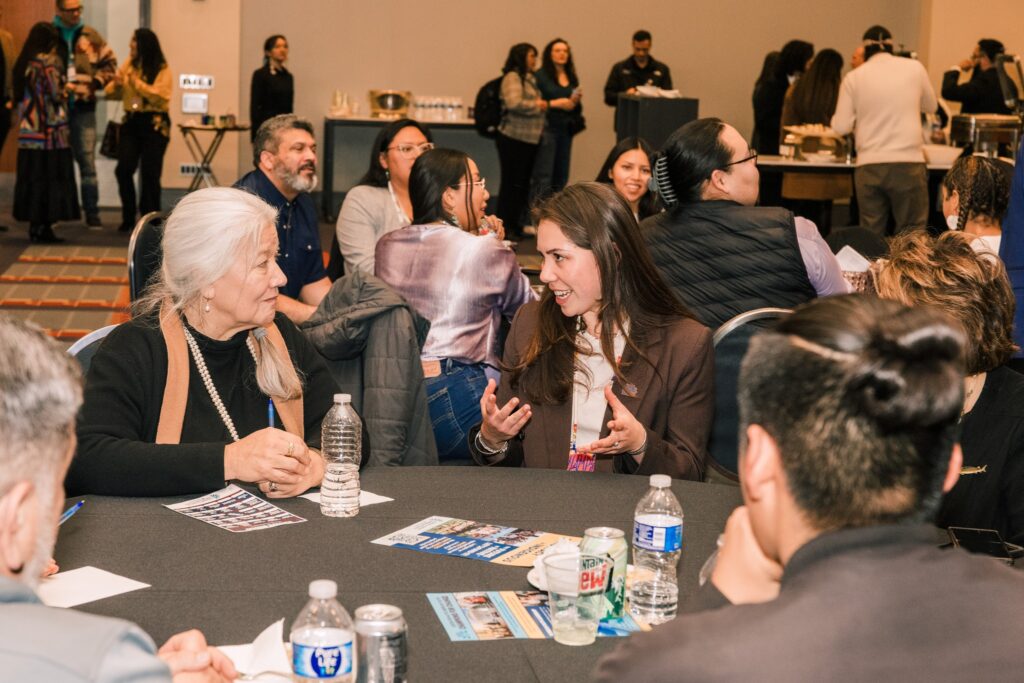
NCAI Youth Commission Officers Angelina Serna and 2024 Champion for Change Wambli Quintana (Navajo & Cheyenne River Sioux) then guided attendees through a speed networking exercise, where the youth in the room were paired with Tribal leaders including Mark Macarro (Pechanga Band of Indians), Pam Shaw (Osage Nation), Ashley Cornforth (Shakopee Mdewakanton Sioux Community), Lora Ann Chaisson (United Houma Nation) and Brian Moskwetah Weeden (Mashpee Wampanoag Tribal Council). Each participant showed up with openness and purpose, beginning relationships that will carry leadership across generations.
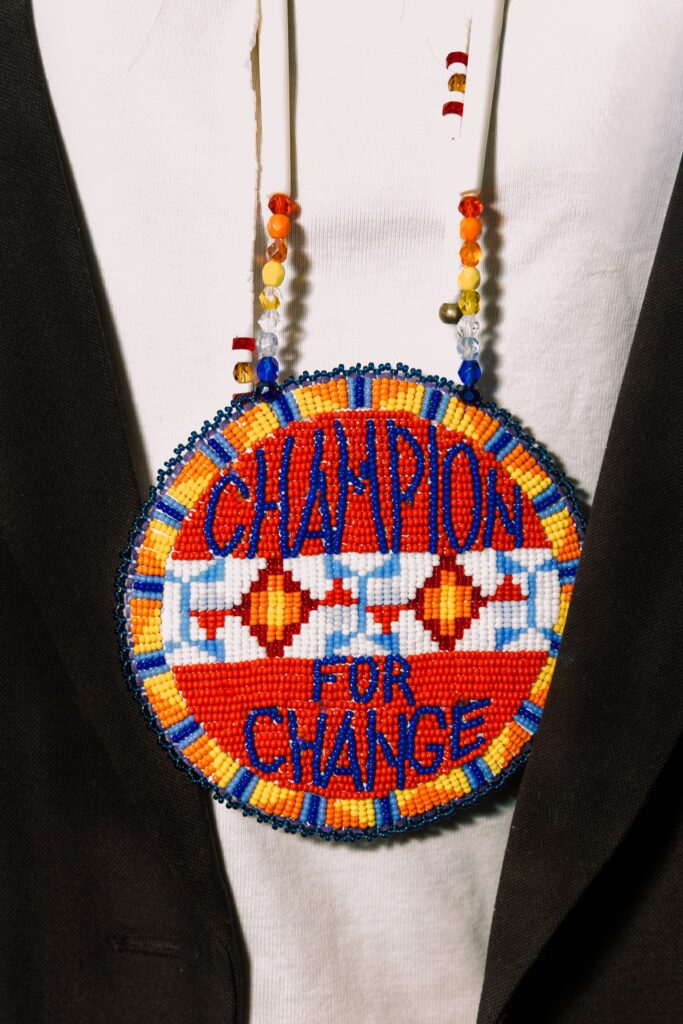
After starting off by taking empowering headshots on Capitol Hill, each Champ went into their daylong journey meeting with their state delegation and staffers, grounded in their purpose and prepared to make connections and forge change.
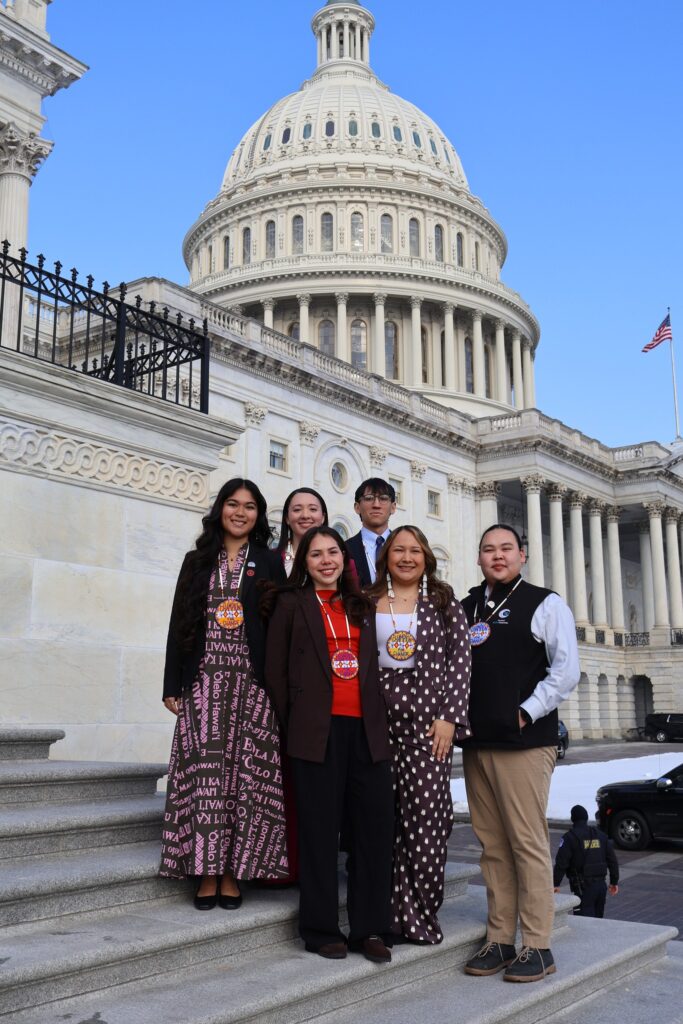
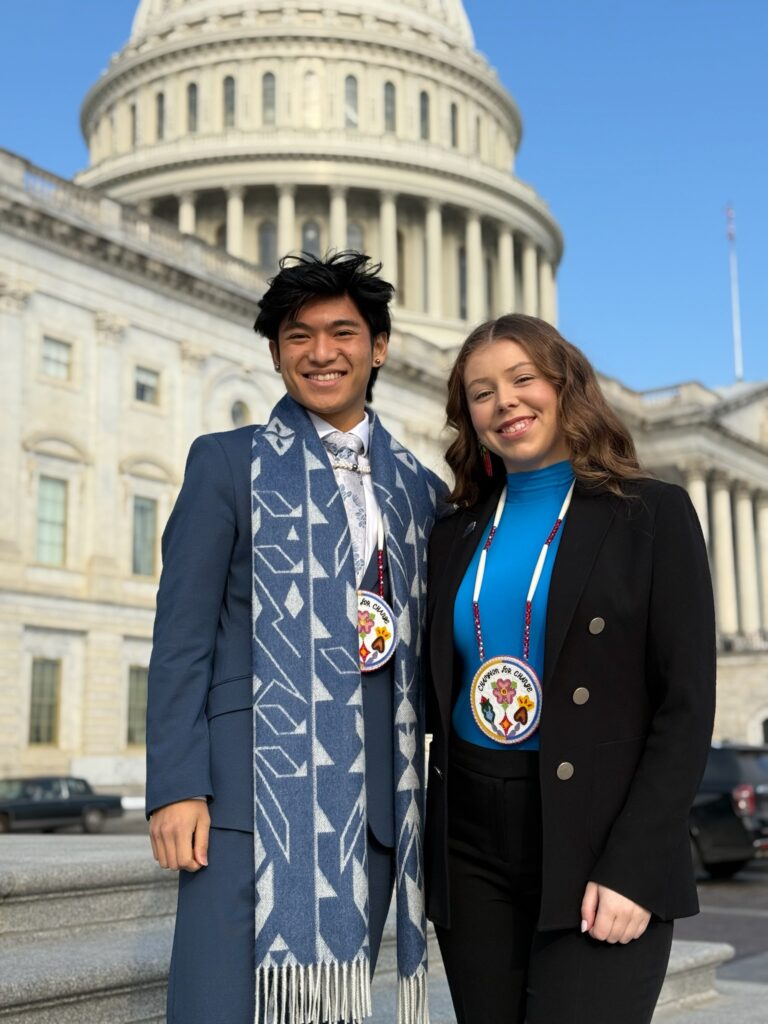
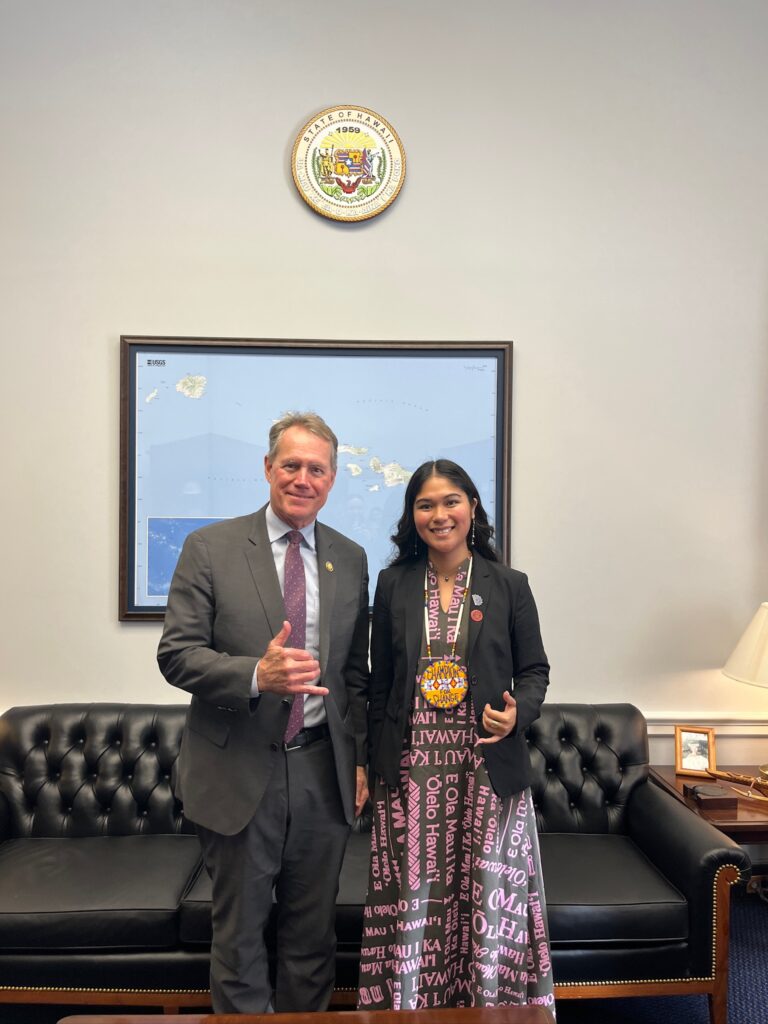
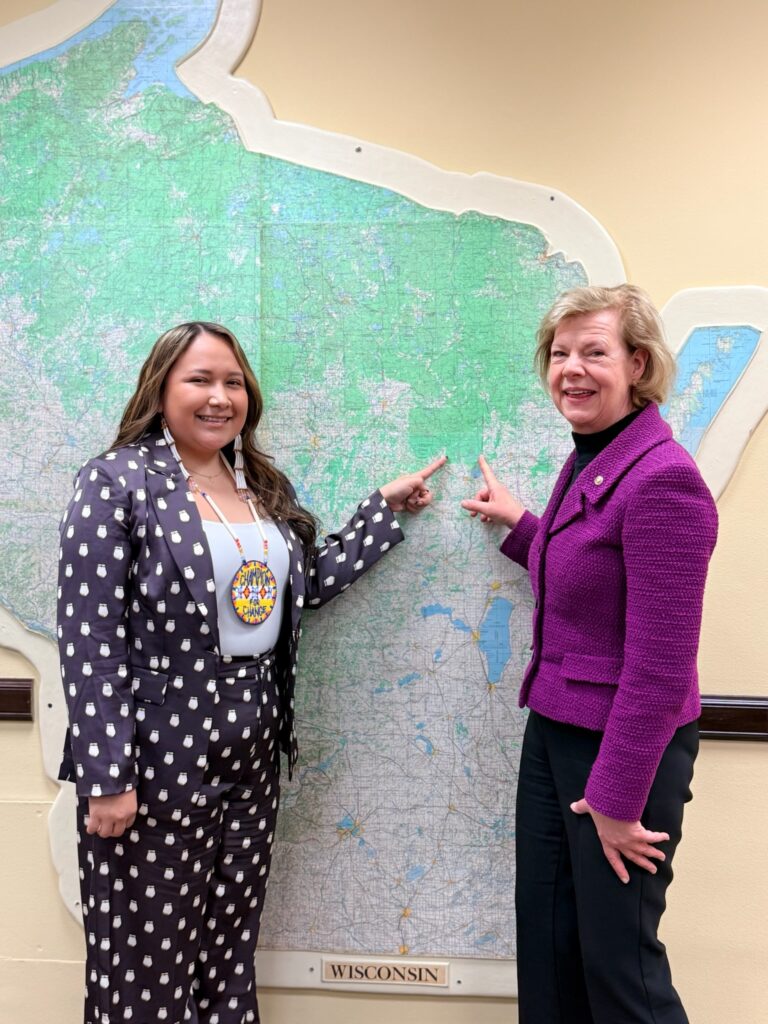
Zianne met with staffers from the offices of Representative Don Davis (D-NC), Senator Ted Budd (R-NC) and Senator Thom Tillis (R-NC) to advocate for culturally-grounded education practices. Sebastian met with staffers from the offices of Senator Richard Blumenthal (D-CT), Senator Chris Murphy (D-CT) and Representative Jahana Hayes (D-CT) to share his views on cannabis cultivation and other means of economic development for Tribes. Kaylah met with Senator Brian Schatz (D-HI), for whom she previously interned, and Representative Ed Case (D-HI) to discuss language preservation efforts and the importance of cultural immersion. McKaylin met with a staffer from the office of Senator Ron Johnson (R-WI) and with Senator Tammy Baldwin (D-WI), with whom she passionately discussed her ideas about mental health practices for Tribal youth and offered her subject-matter expertise as an available resource for the Senator’s office. Summer met with staffers from the offices of Senator Ron Wyden (D-OR), Senator Jeff Merkley (D-OR) and Representative Cliff Bentz (R-OR) to advocate for increased financial literacy for Native youth across the state. Moses started his day having coffee attorney Naomie Droll (Navajo Nation) over coffee, before meeting Amber Ebarb, staff director for the Senate Committee on Indian Affairs (SCIA), and staffers from the office of Senator Dan Sullivan (R-AK).
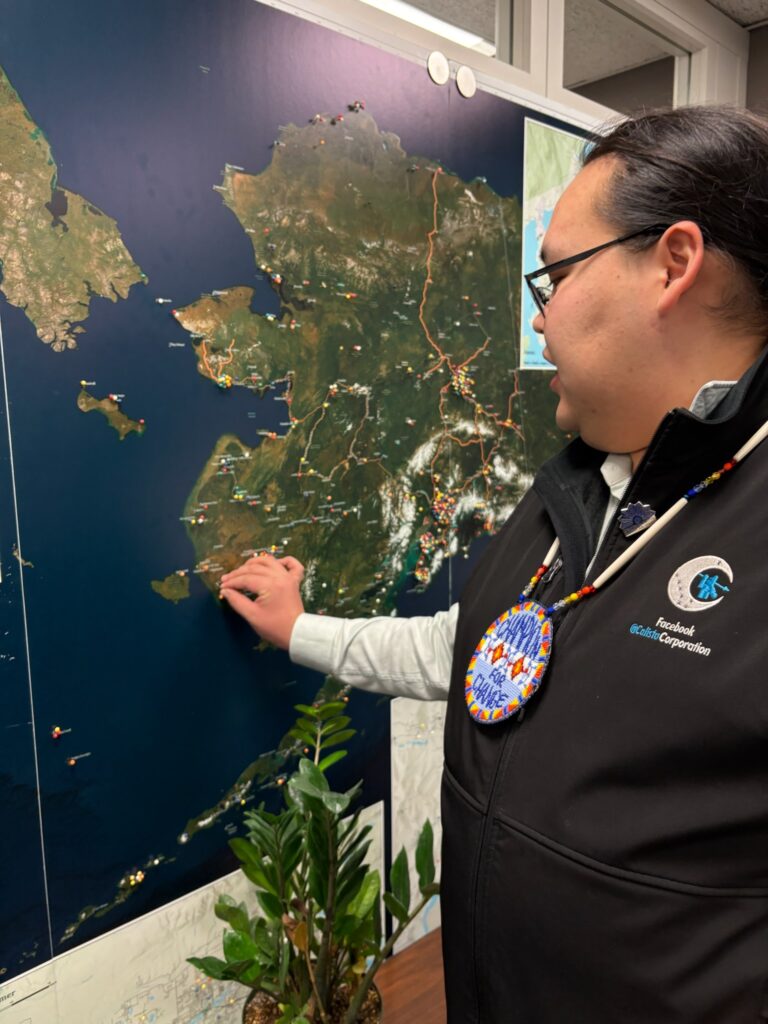
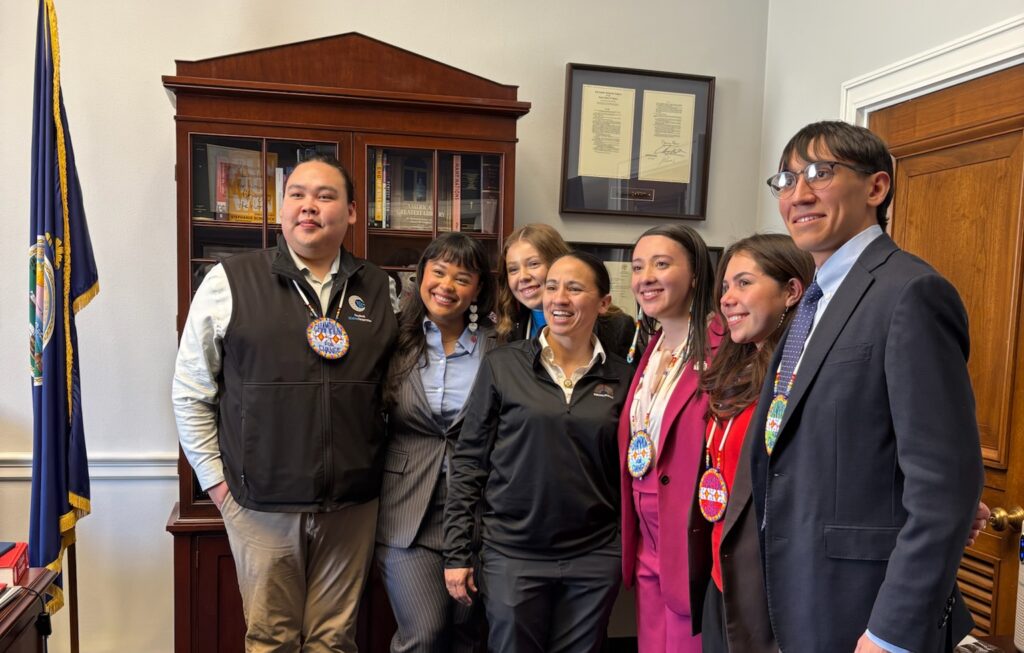
All Champs were also invited to meet with Samuel Hiratsuka (Unangax̂, Yup’ik, Winnemem Wintu & Navajo), a 2023 Champion for Change who now serves as a SCIA staffer under Chairman Lisa Murkowski (R-AK), and Representative Sharice Davids (Ho-Chunk), one of only two Native American women, and the first openly LGBTQIA2S+ Native American, elected to the United States Congress.
Following these Hill Day meetings, Champs were treated to a private tour of the U.S. Capitol, guided by 2020-2021 Champion for Change Jazmine Wildcat (Northern Arapaho). That evening, we attended Honoring the Way Forward: A Reception for Native Education, where Senator Murkowski discussed the Alyce Spotted Bear and Walter Soboleff Commission on Native Children and former Speaker of the U.S. House of Representatives Nancy Pelosi (D-CA) was honored by NCAI. At the end of another long day, Champs spent time decompressing over dinner and karaoke with their alumni mentors.
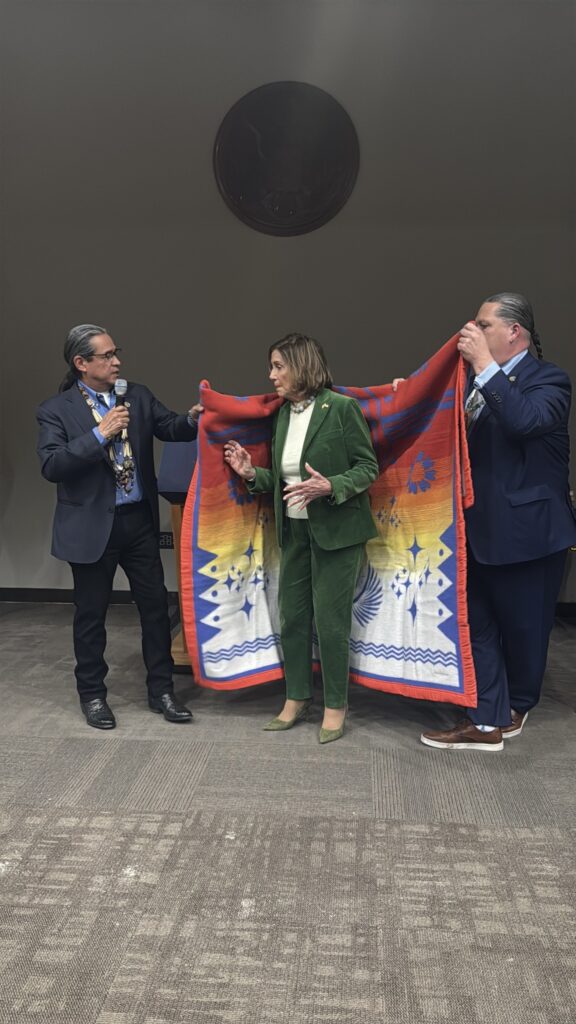
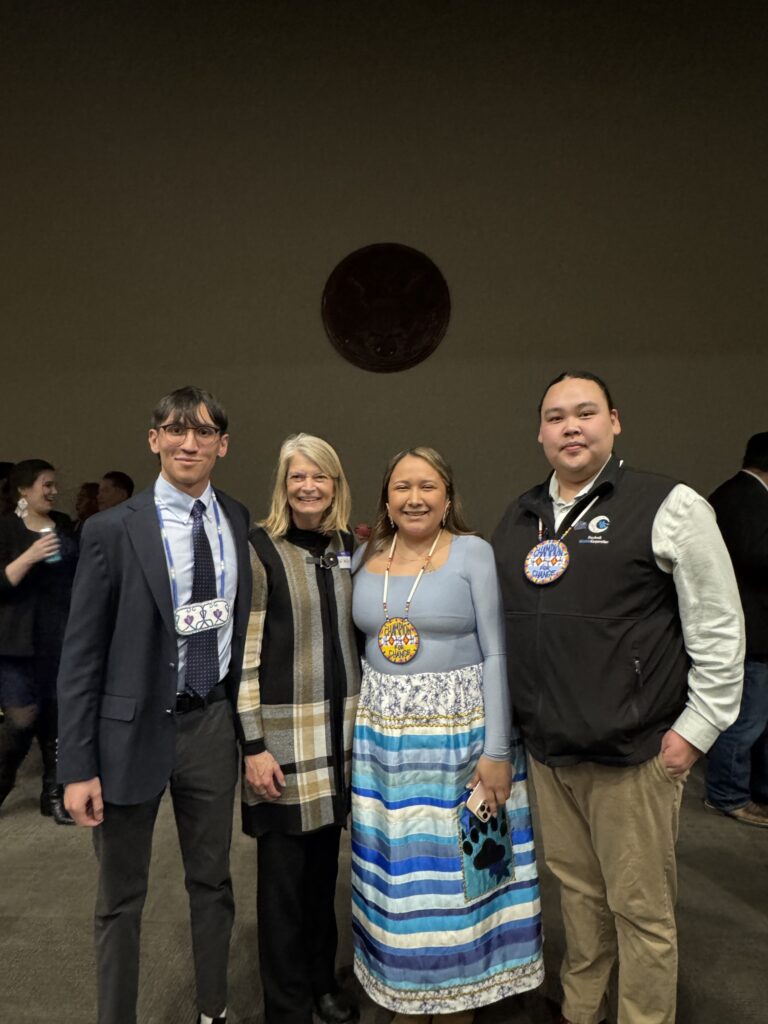
The fourth and final day of Champs Week 2026 began with Summer sharing her platform and passion with her peers by giving us the financial literacy training she’s worked to develop. Next, four of the Champs recorded their first live interview with Native America Calling while the rest of the cohort, staff and special guest Jourdan Bennett Begaye (Diné) listened and cheered them on. Jourdan, who serves as managing editor of ICT, provided feedback and gave the group advice on how to “Communicate as a Champion” and meaningfully engage with the media.
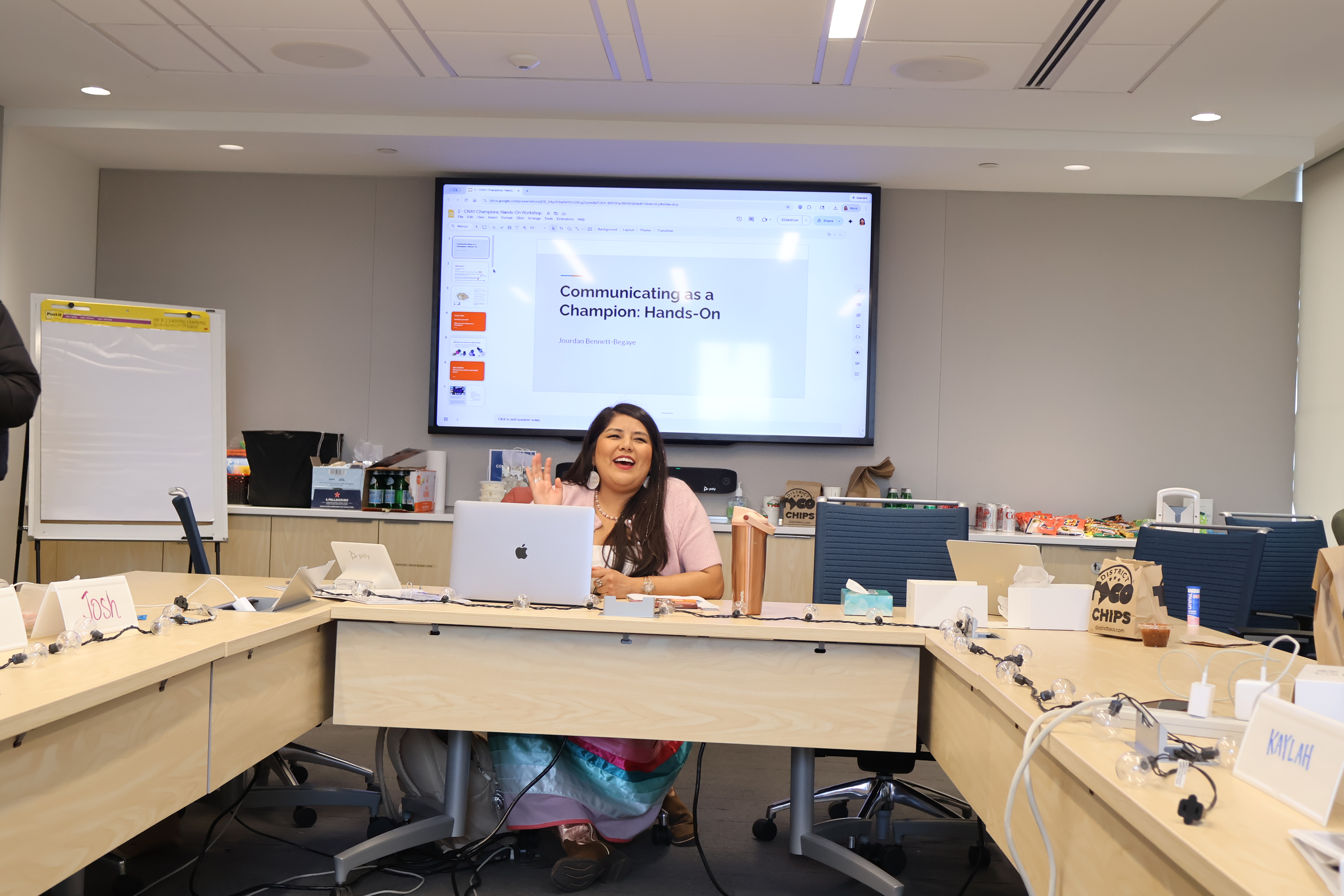
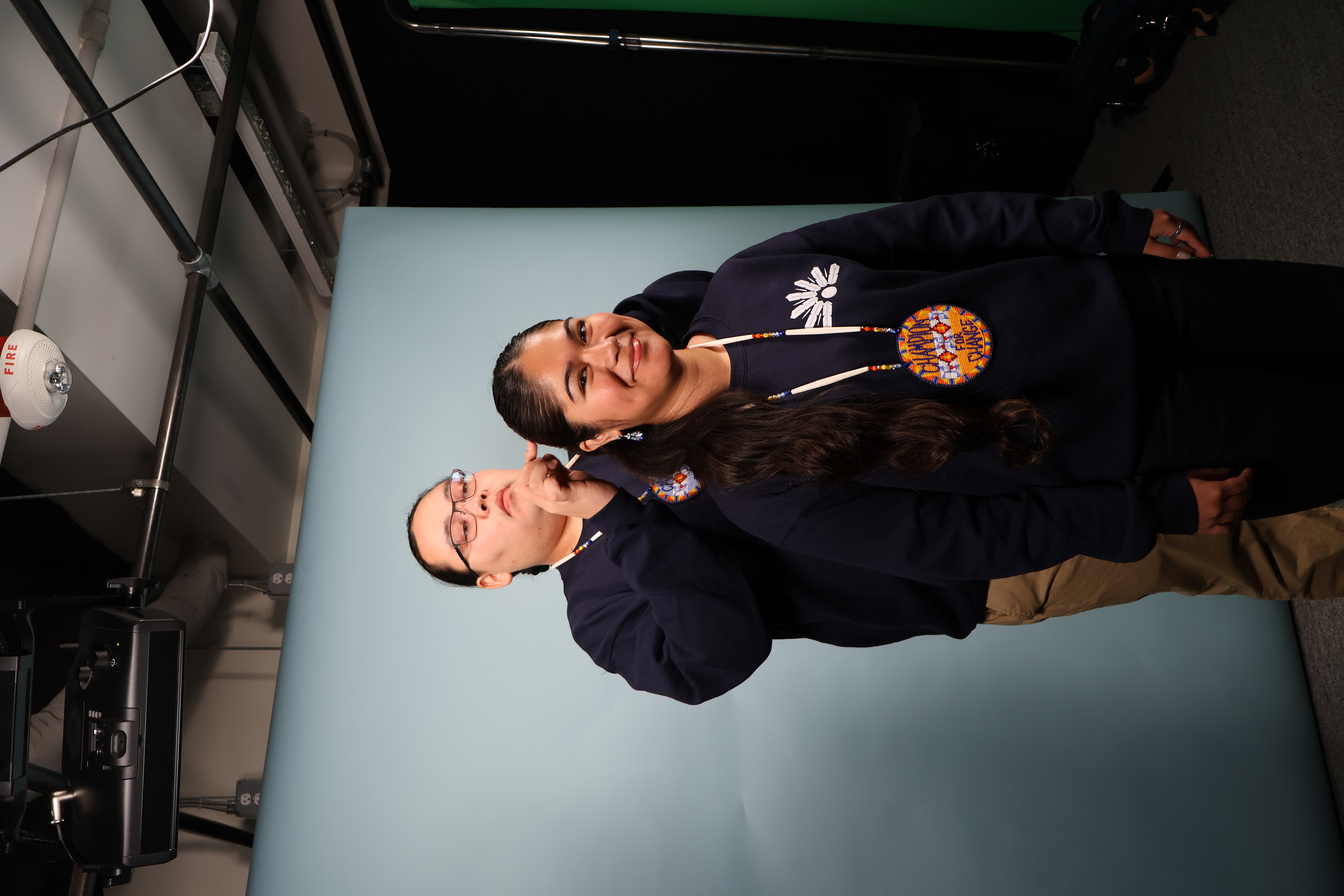
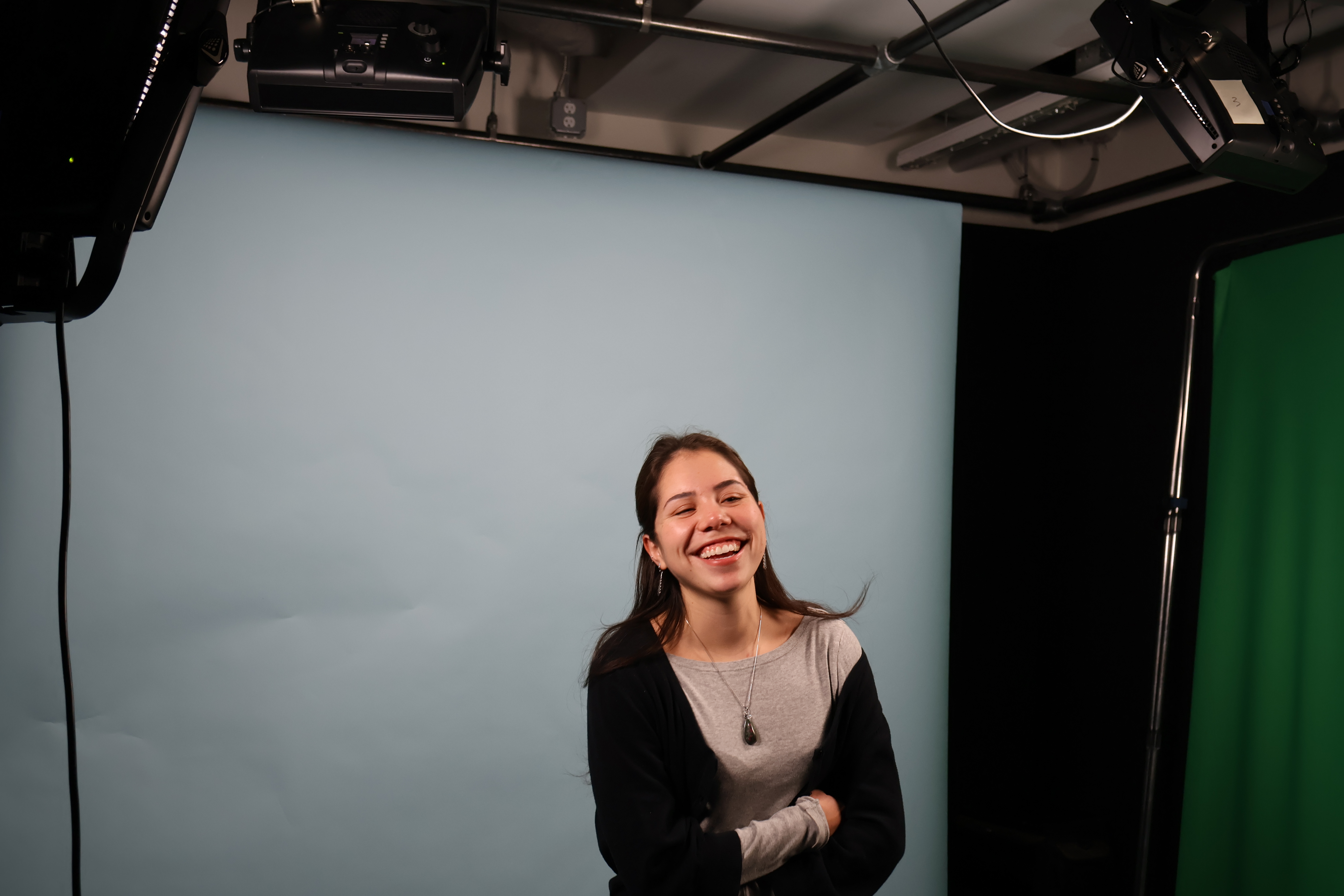
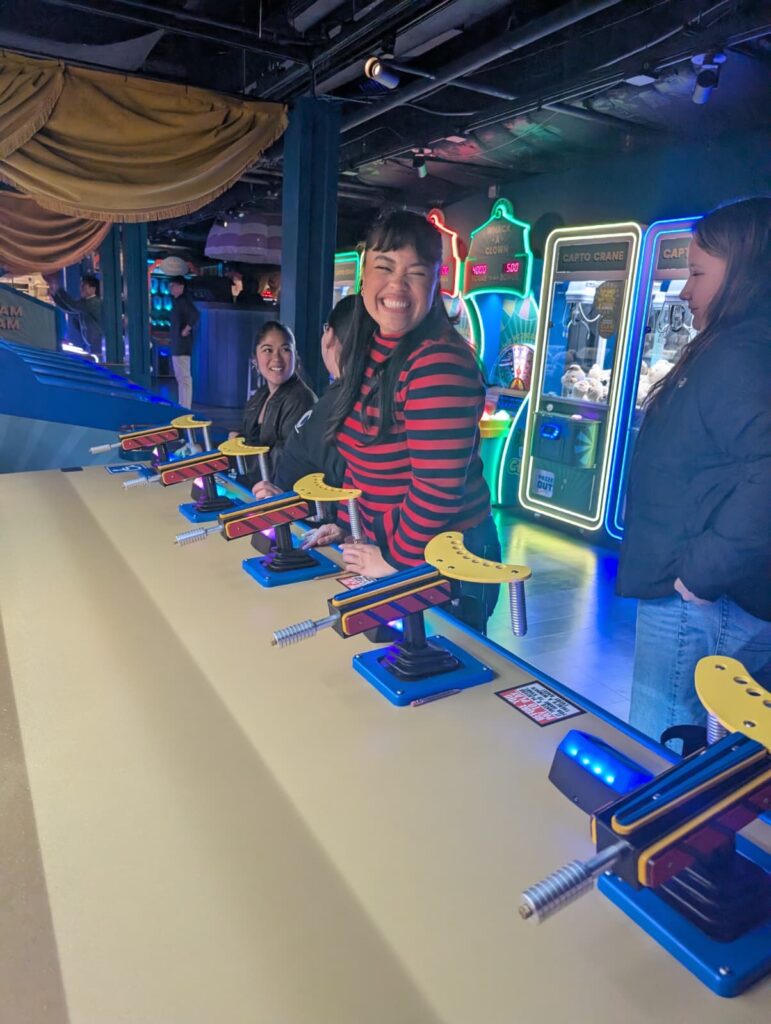
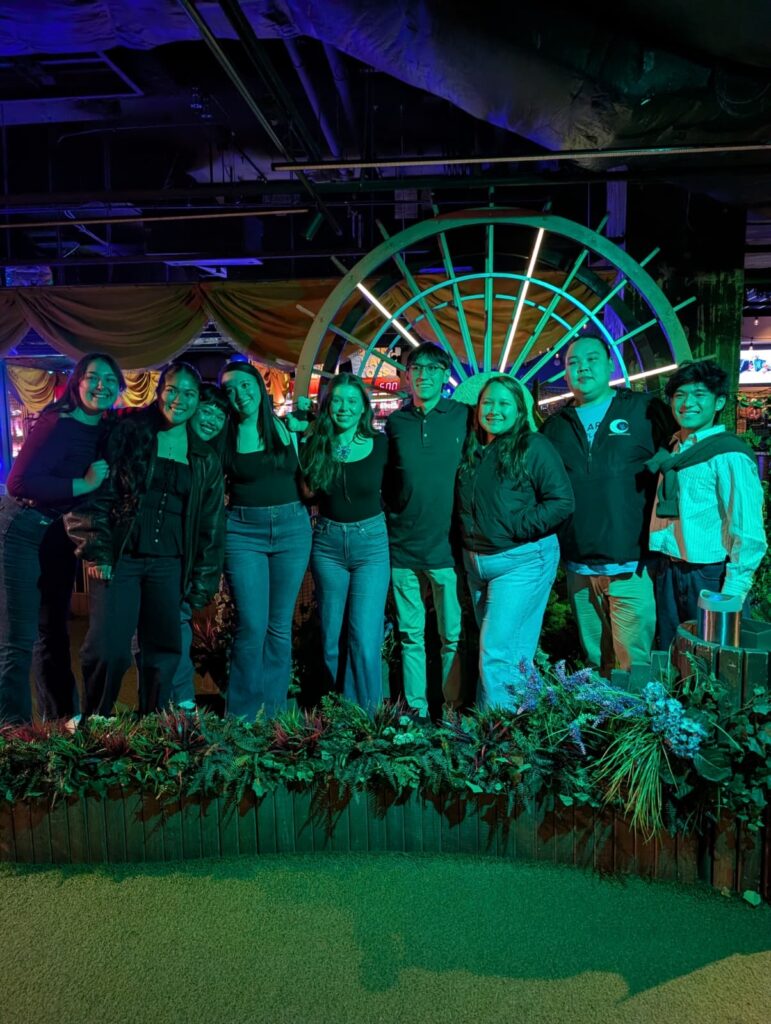
Champs then put their newfound skills to the test and conducted on-camera interviews in the Aspen studio, reflecting on their week and sharing words of wisdom and encouragement for other Native youth. We concluded our formal programming all together, sharing letters the Champs had written to one another and expressing our awe at the community, knowledge and bonds of friendship shared over the past days. Before going our separate ways, the Champs met up for a round of mini-golf at Swingers in Dupont Circle, and ventured to a new area of DC to check out the Songbyrd Music House to see Black Belt Eagle Scout and Mato Wayuhi perform, concluding the way we started, with good medicine: music, food and laughter.
Special thanks to the CNAY staff who worked tirelessly to make this week a reality, especially our programs team: Katy, Tahnee, Neely & Samantha.