 Champions for Change
 Remembering Our Sisters
 Brave Heart
 California Native Youth Collective
 Building Communities of Hope
 Creative Native
 Democracy is Indigenous
This content originally appeared on the Center for Rising Generations’ Substack: The GroupChat
By: Sophia Many Turning Robes, CRG Youth Advisory Council Member & 2024 Brave Heart Fellow
Part of CRG’s Earth Day feature, “The Climate Generation,” spotlighting young climate leaders shaping the future.
My mother tells me stories about playing outside as a child on the Spokane Indian Reservation when the mine trucks would drive through our community. The trucks were uncovered and heavy, carrying material from the Midnite Mine, where uranium had been extracted from the mountains of our reservation. Dust rose from the trucks, settling on the ground, on homes, community buildings, and on the streets where she and other children played. That dust did not vanish; it lingered in the air and in the earth, embedding itself into our community. The Midnite Mine, opened in 1954 during the Cold War to supply uranium for weapons, closed in the early 1980s, but its environmental consequences remain. Today, it is a Superfund site, one of roughly 200 located on or near Tribal lands, according to the Environmental Protection Agency.
Her memory stands in stark contrast to a world, two centuries earlier—when our connection to balance was entirely different, when our communities lived in true reciprocity with the land. Plants, animals, and roots flourished. Salmon filled the rivers in such abundance that the runs turned the waters red, as if you could walk across them. They grew five feet long and weighed one hundred pounds or more. Every star in the sky visible, untouched by the glare of light pollution. That world existed not long ago—but our generation is the one growing up with its absence felt the most.
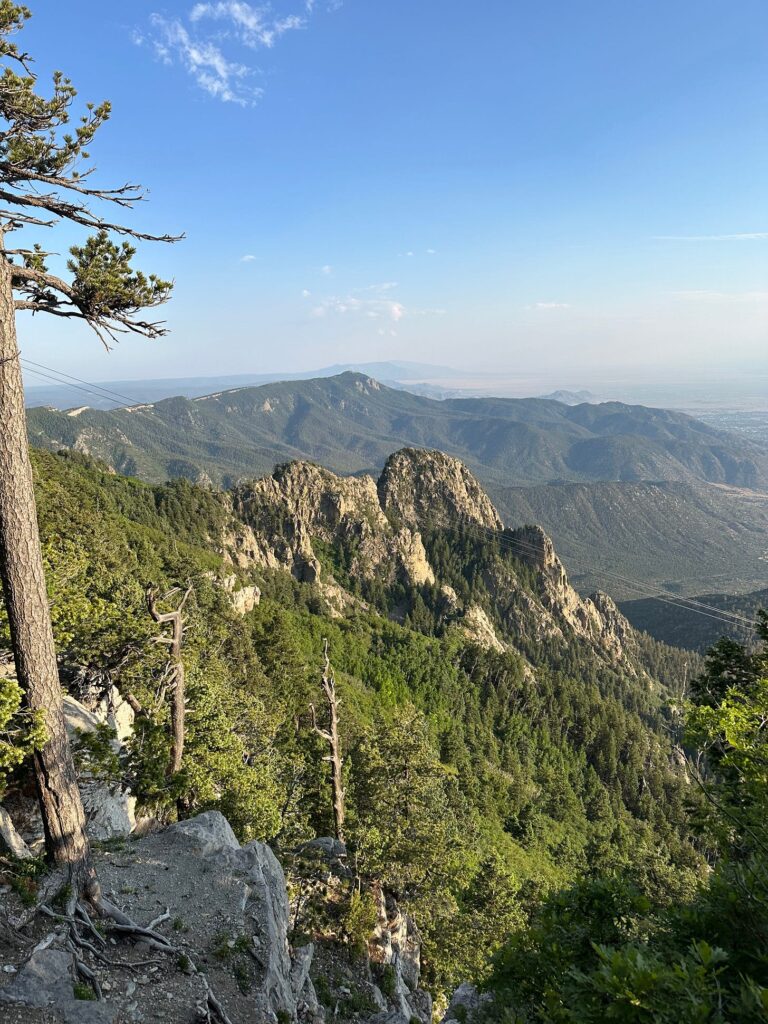
And yet, that same timeline offers something else: perspective, and with it, hope. The most severe disruptions to our lands and lifeways did not unfold over thousands of years—they accelerated within just the past few centuries. Colonization, industrial extraction, and environmental degradation are recent in the life of our peoples. That means the imbalance we are witnessing is not ancient or irreversible. It can be addressed, not all at once, but in deliberate, incremental ways. Restoration does not require us to undo millennia—it asks us to interrupt and repair a much shorter period of harm. It is essential to recognize a truth often overlooked: the Earth itself is resilient. Long before these systems existed, the land sustained itself for millions of years. Ecosystems have always adapted, regenerated, and evolved. Our home planet is not fragile in the way we often imagine. It is capable of recovery when given the chance.
This does not diminish the urgency of our responsibility—but it does mean that our efforts are not in vain. When we restore even small parts of our environment, we are working with the strength of the Earth, not against it.
And yet, that same timeline offers something else: perspective, and with it, hope. The most severe disruptions to our lands and lifeways did not unfold over thousands of years—they accelerated within just the past few centuries. Colonization, industrial extraction, and environmental degradation are recent in the life of our peoples. That means the imbalance we are witnessing is not ancient or irreversible. It can be addressed, not all at once, but in deliberate, incremental ways. Restoration does not require us to undo millennia—it asks us to interrupt and repair a much shorter period of harm. It is essential to recognize a truth often overlooked: the Earth itself is resilient. Long before these systems existed, the land sustained itself for millions of years. Ecosystems have always adapted, regenerated, and evolved. Our home planet is not fragile in the way we often imagine. It is capable of recovery when given the chance. This does not diminish the urgency of our responsibility—but it does mean that our efforts are not in vain. When we restore even small parts of our environment, we are working with the strength of the Earth, not against it.
The imbalance we are witnessing is not ancient or irreversible. It can be addressed.
Youth are uniquely positioned to lead environmental justice efforts because the realities we inherit have forced us to decolonize our minds and hearts in order to envision a world in which all communities, ecosystems, and future generations can thrive simultaneously. Now more than ever, young people are not only witnessing challenges—they are actively responding to them. We are among the clearest voices questioning systems that were never designed to sustain life. What gives me hope is not just awareness, but a willingness to act with honesty and intention. The next big question facing youth is not whether restoration is possible, but whether the systems that disrupt it will continue to go unchallenged. The harmful changes we are experiencing are making it increasingly difficult to ignore the need for action. In many ways, these realities are prompting a broader shift in expectations. People are asking more of institutions, holding corporations accountable, and supporting practices that protect the environment. Change may not happen all at once, but it is already underway.
Our generation feels the absence of balance most – but we are also part of its restoration.
Our generation feels the absence of balance most acutely, but we are also part of its restoration. Repair can happen in increments, beginning with familiar, tangible actions: recycling, starting a garden, and conserving water in our daily lives. Each step contributes to a larger process of healing. The damage we face is real, but it is not beyond repair. The Earth has endured far longer than the systems that disrupted it. That endurance is something we can learn from. It reminds us that while the work ahead is significant, it is also possible—and that even steady, incremental change can help guide us back toward balance.
What does restoration look like in your community?